
Medieval · Dining Room
Medieval Dining Room ideas
A Medieval dining room pairs rough-hewn stone and flagstone with a castle stone (#8A8578) base. Start with long trestle dining table, keep oxblood red (#5C1A1B) to accents under 10% of the room, and let heavy oak and aged timber add texture. Preview it on your own dining room photo in RivAI first.
Free to try · 3-day free trial on annual · Cancel anytime
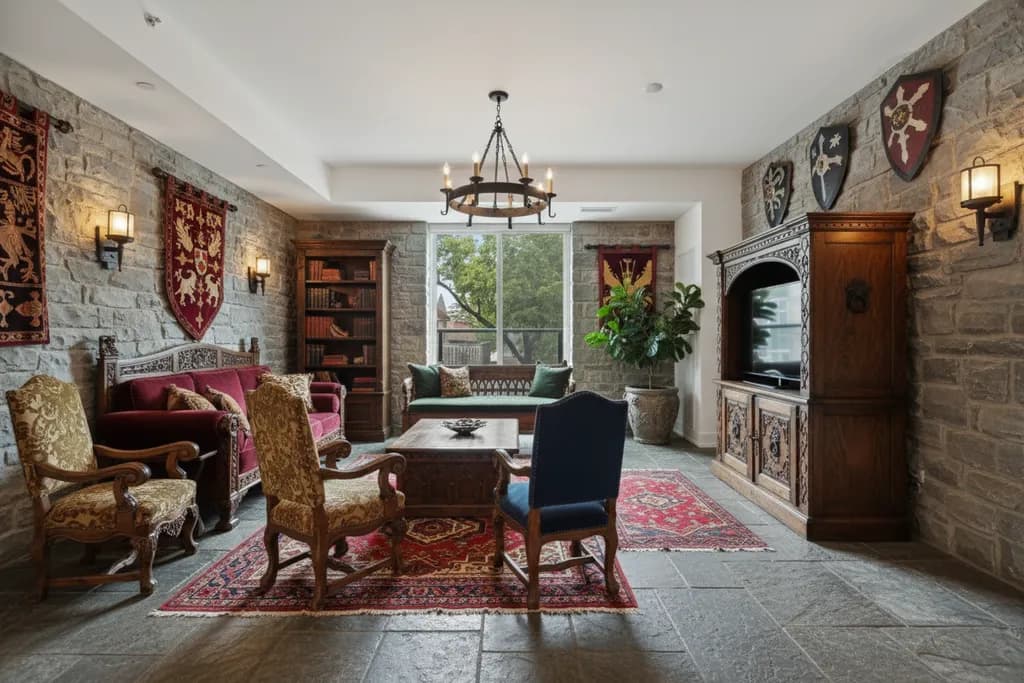
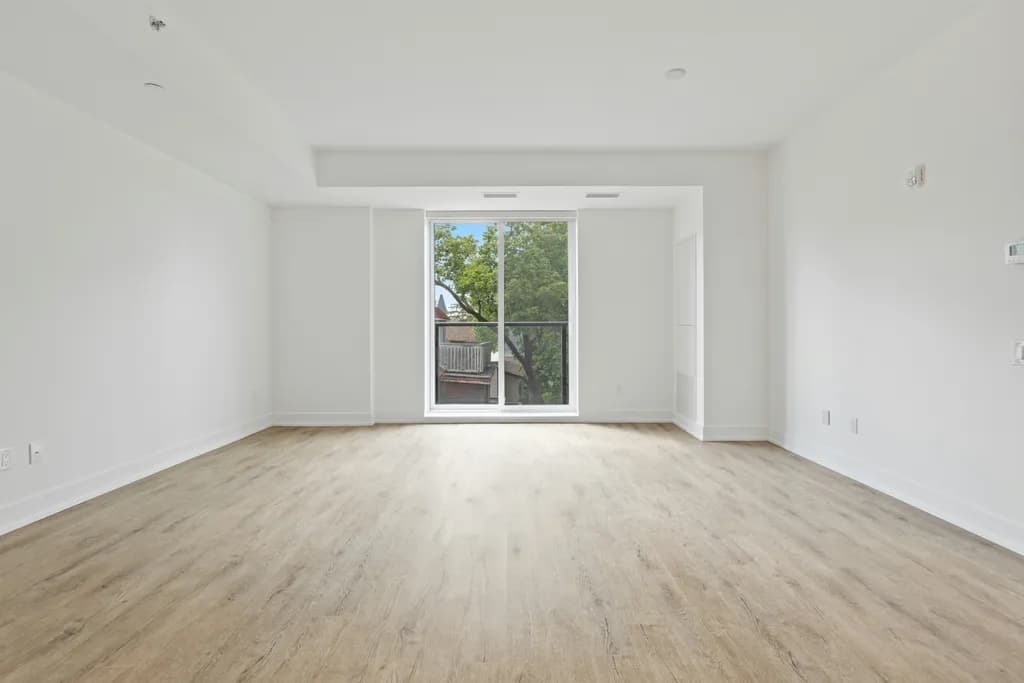
The Medieval palette for a dining room
Try this Medieval palette on your own dining room: Try Medieval in RivAI
How to get the look, step by step
- 1Photograph your dining room in daylight with the widest view you can frame — the RivAI app needs the whole space to work with.
- 2Set the base: Castle Stone (#8A8578) for walls and fireplace surrounds.
- 3Allow 60 cm of table width per seat, and 90 cm of clearance between the table edge and walls or furniture.
- 4Bring in rough-hewn stone and flagstone and heavy oak and aged timber — the two signature materials of Medieval design.
- 5Add one statement piece: long trestle dining table.
- 6Finish with oxblood red (#5C1A1B) accents in textiles or decor, keeping them under 10% of the visual field.
Key materials
- Rough-hewn stone and flagstone
- Heavy oak and aged timber
- Forged wrought iron
- Thick wool tapestry fabric
- Studded and tooled leather
Furniture to look for
- Long trestle dining table
- High-back carved oak chairs
- Wrought iron chandelier or candelabra
- Woven tapestry wall hanging
- Four-poster bed with heavy drapes
Mistakes to avoid
- Buying a table too large for the room, so chairs scrape the walls and serving becomes an obstacle course.
- Hanging the pendant too high, which loses the intimate pool of light that defines dining.
- Choosing a rug too small, so chair legs catch the edge every time someone sits down.
Budget tips
- Refinish or repaint an existing table instead of replacing it - sanding and new stain costs little and looks custom.
- Mix chairs deliberately: keep your current set and add two different host chairs at the ends.
- Swap the light fixture; a new pendant rewires the whole mood of the room for the price of a nice dinner.
FAQ
Does Medieval work in a dining room?
Yes — Medieval is one of the best-suited styles for a dining room. Its rough-hewn stone and flagstone and castle stone base palette fit the way this space is used. Keep the room's function first and let the style come through in finishes and textiles.
What colors should I use for a Medieval dining room?
The core palette is Castle Stone #8A8578, Dark Oak #4B3621, Wrought Iron #1F1F1F, Oxblood Red #5C1A1B, Ochre Gold #B08A3C. Use Castle Stone as the dominant color, Dark Oak for secondary surfaces, and keep Oxblood Red for accents only.
Can I see my own dining room in Medieval style before committing?
Yes. Take a photo of your dining room in the RivAI iPhone app, choose the Medieval style, and you get a photorealistic preview in about 30 seconds on the Standard tier. RivAI is free to try, so you can compare Medieval with a few other styles before you buy paint or furniture.
What makes a room look medieval?
Heavy natural materials and low warm light: stone or stone-look walls, dark oak beams and furniture, wrought iron fixtures, tapestry and candle-style chandeliers. Weight and texture matter more than decorative props.
Keep exploring
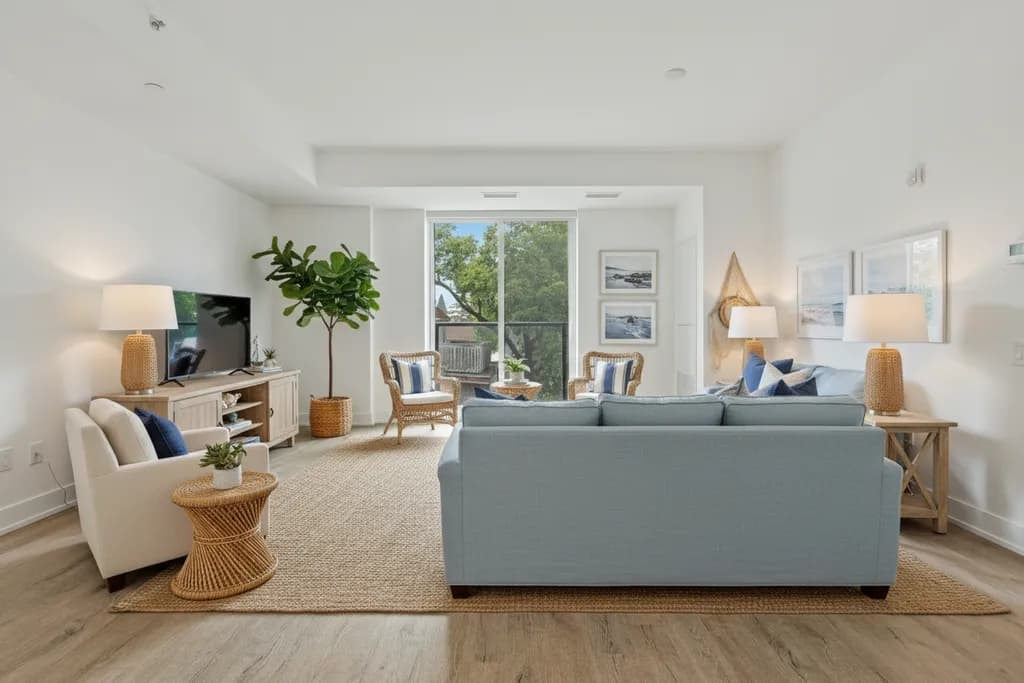
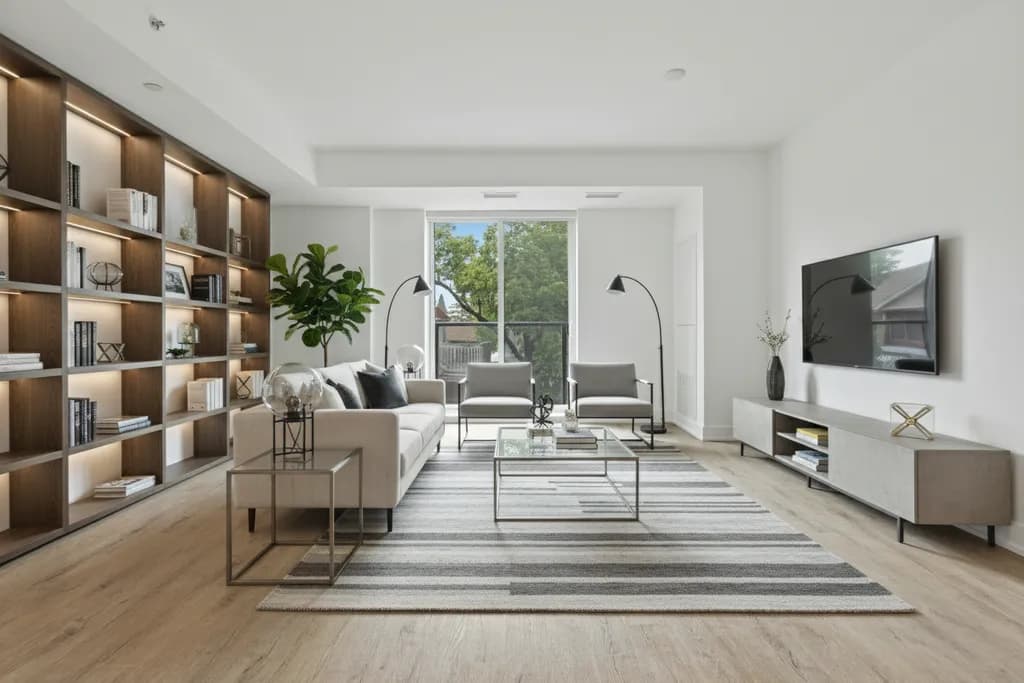
More: Medieval interior design, dining room ideas, AI interior design and interior color palette generator.
Last updated 2026-10-09
Try Medieval on your dining room
Snap it, pick a style, see it redesigned in about 30 seconds.
Free to try · 3-day free trial on annual · Cancel anytime
