
Mid-Century · Living Room
Mid-century modern living room ideas
A Mid-Century living room pairs teak and walnut wood with a teak (#8A5A33) base. Start with teak sideboard with tapered legs, keep burnt orange (#C05621) to accents under 10% of the room, and let molded plywood and fiberglass add texture. Preview it on your own living room photo in RivAI first.
Free to try · 3-day free trial on annual · Cancel anytime
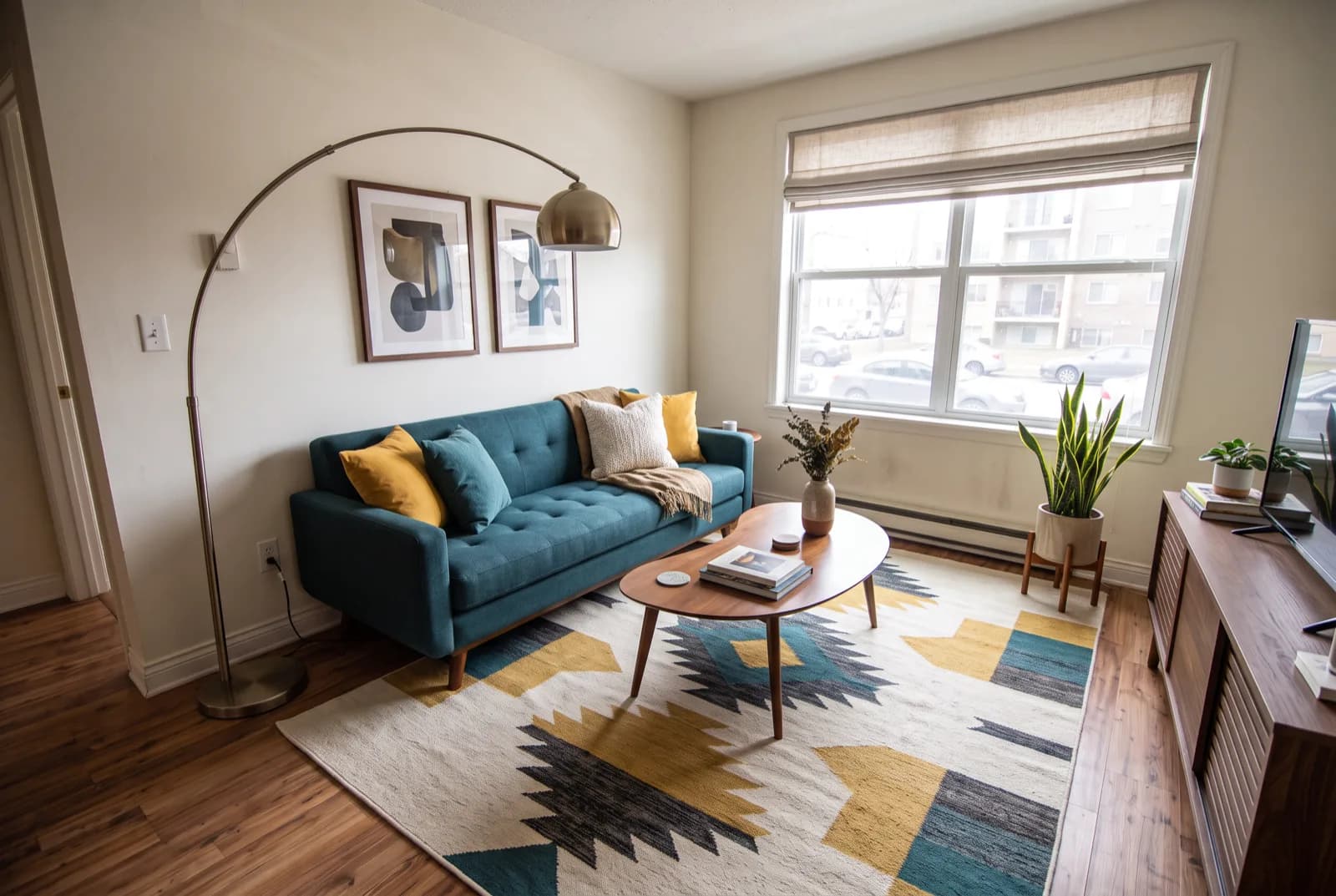
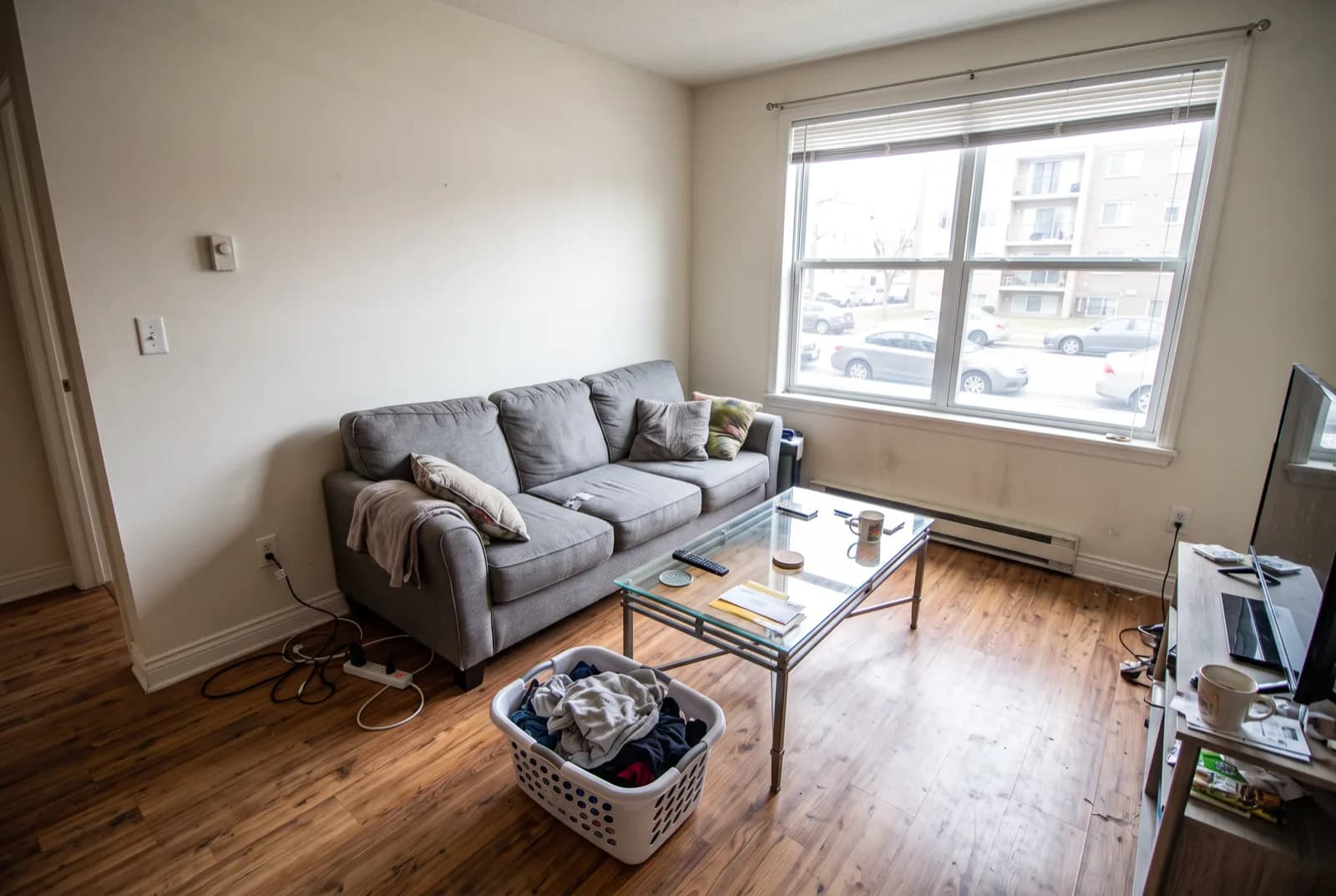
The Mid-Century palette for a living room
Try this Mid-Century palette on your own living room: Try Mid-Century in RivAI
How to get the look, step by step
- 1Photograph your living room in daylight with the widest view you can frame — the RivAI app needs the whole space to work with.
- 2Set the base: Teak (#8A5A33) for furniture and wood paneling.
- 3Anchor the seating area with a rug large enough that at least the front legs of the sofa and chairs sit on it.
- 4Bring in teak and walnut wood and molded plywood and fiberglass — the two signature materials of Mid-Century design.
- 5Add one statement piece: teak sideboard with tapered legs.
- 6Finish with burnt orange (#C05621) accents in textiles or decor, keeping them under 10% of the visual field.
Key materials
- Teak and walnut wood
- Molded plywood and fiberglass
- Brass and matte gold accents
- Tweed and wool upholstery
- Ceramic and enamel decor
Furniture to look for
- Teak sideboard with tapered legs
- Eames-style lounge chair and ottoman
- Tulip or oval dining table
- Kidney-shaped coffee table
- Sputnik or arc floor lamp
Mistakes to avoid
- Pushing all furniture against the walls, which leaves a dead empty zone in the middle of the room.
- Choosing a rug that is too small, making the seating area look like it is floating apart.
- Relying on a single overhead light, which flattens the room and creates harsh shadows.
Budget tips
- Rearrange existing furniture before buying anything — a new layout costs nothing and changes everything.
- Spend on the sofa and rug first; side tables, lamps and decor can be budget finds.
- Paint one accent wall instead of the whole room to cut paint cost and effort by three quarters.
FAQ
Does Mid-Century work in a living room?
Yes — Mid-Century is one of the best-suited styles for a living room. Its teak and walnut wood and teak base palette fit the way this space is used. Keep the room's function first and let the style come through in finishes and textiles.
What colors should I use for a Mid-Century living room?
The core palette is Teak #8A5A33, Olive Green #6B7248, Mustard Yellow #D9A62E, Burnt Orange #C05621, Warm Cream #F0E7D8. Use Teak as the dominant color, Olive Green for secondary surfaces, and keep Burnt Orange for accents only.
Can I see my own living room in Mid-Century style before committing?
Yes. Take a photo of your living room in the RivAI iPhone app, choose the Mid-Century style, and you get a photorealistic preview in about 30 seconds on the Standard tier. RivAI is free to try, so you can compare Mid-Century with a few other styles before you buy paint or furniture.
What years define mid-century modern design?
Mid-century modern covers roughly 1945 to 1969, the postwar decades when designers like Charles and Ray Eames and Eero Saarinen defined the style. Its hallmarks are organic shapes, tapered legs, teak and walnut wood, and functional furniture made with then-new molding techniques.
Keep exploring
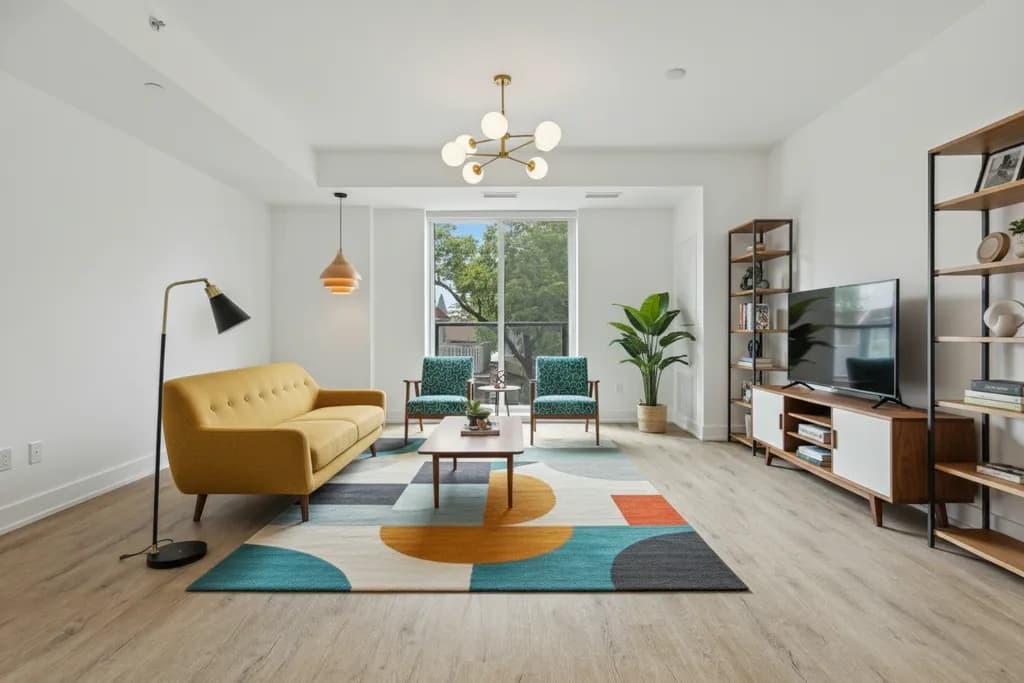
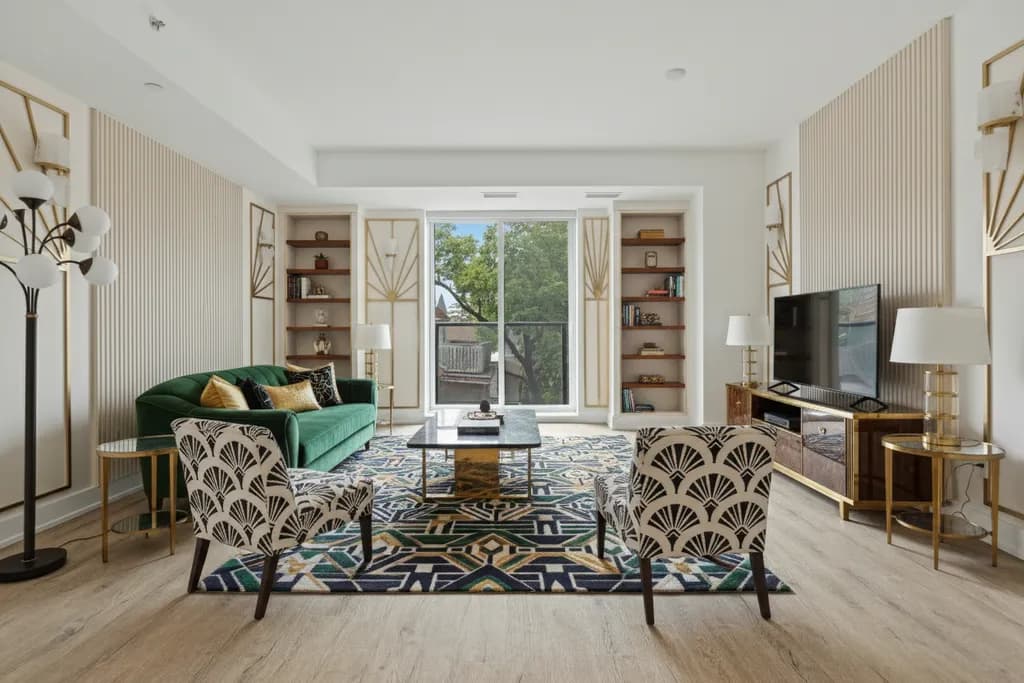
More: Mid-Century interior design, living room ideas, AI interior design and interior color palette generator.
Last updated 2026-10-09
Try Mid-Century on your living room
Snap it, pick a style, see it redesigned in about 30 seconds.
Free to try · 3-day free trial on annual · Cancel anytime
