
Style guide
Biophilic interior design: the style guide
Nature as the design principle - light, air, plants and raw materials
Biophilic interior design is an approach that treats connection to nature as the core design principle, not a decoration. It maximizes daylight and natural ventilation, fills rooms with living plants, and uses raw wood, stone and organic shapes throughout. The goal is a healthy, calming space that measurably reduces stress by keeping occupants connected to the natural world.
Free to try · 3-day free trial on annual · Cancel anytime
The Biophilic palette
See this Biophilic palette on a photo of your own room: Try Biophilic in RivAI
Try these exact colors on your walls with the paint color visualizer, or generate variations in the free palette generator.
What defines Biophilic design?
Biophilic design is less a visual style than a set of principles rooted in biophilia - the human affinity for nature. Developed through architecture and environmental psychology, it holds that rooms should deliver what outdoor environments do: natural light cycles, fresh air, views of greenery, natural materials and organic forms. Plants are central, but they are only one layer of the system.
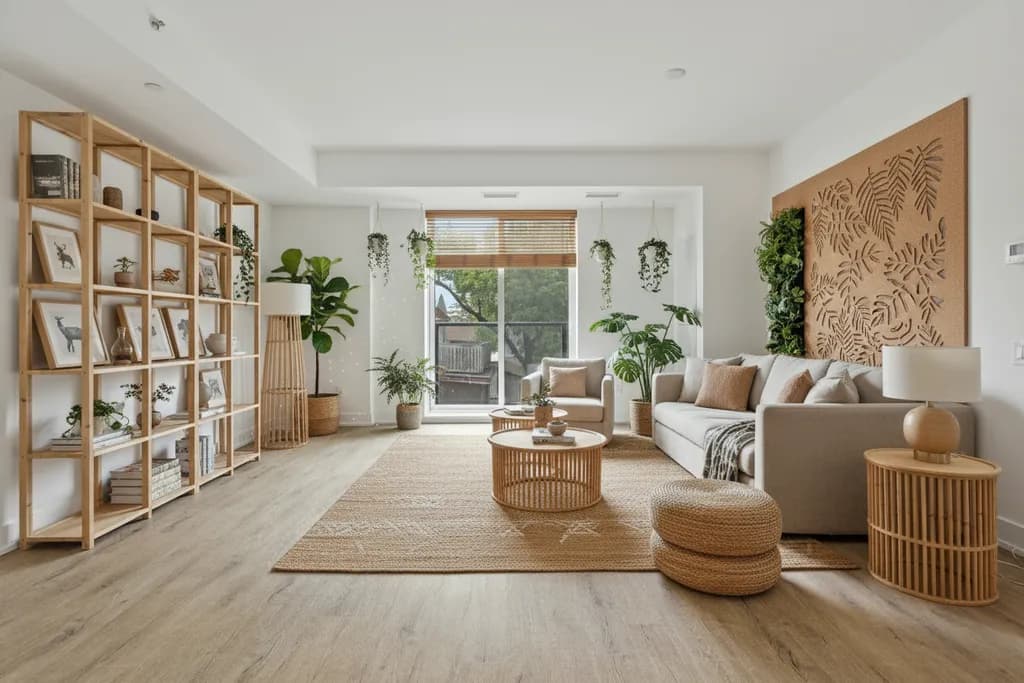
The visual language follows from the principles: pale and raw wood, stone and clay, wool and linen, a palette drawn from forest and earth - greens, browns, warm neutrals and sky tones. Furniture favors rounded, organic shapes over hard geometry, and layouts orient seating toward windows and views.
What separates biophilic design from simply adding houseplants is intent. A biophilic room plans daylight, airflow, plant placement and material health together. Done well, it improves mood, focus and sleep - the aesthetic calm is a side effect of a genuinely healthier space.
Try Biophilic on your own space with AI interior design, interior color palette generator and interior design style quiz.
Signature materials
- Raw and oiled solid wood
- Natural stone and clay
- Linen, wool and organic cotton
- Cork and bamboo
- Living plants and moss walls
- Rattan and woven grasses
Furniture & decor
- Solid wood table with a live edge or organic shape
- Linen-upholstered sofa in a warm neutral
- Plant shelving and tiered plant stands
- Rounded lounge chair in wool or boucle
- Large windows left bare or with sheer linen
- A stone or clay side table
Mistakes to avoid
- Treating biophilic design as just adding a few plants to an unchanged room.
- Blocking windows with heavy curtains when daylight is the foundation of the style.
- Choosing synthetic finishes and plastics that undermine the natural-material principle.
- Clustering plants in dark corners where they cannot thrive or be seen.
- Using harsh cool-white lighting that fights the warm, natural light quality.
Biophilic on a budget
- Rearrange furniture toward windows first - daylight is free and does the most work.
- Propagate plants from cuttings instead of buying mature specimens.
- Choose one raw wood piece second-hand over several synthetic new items.
- Swap heavy drapes for cheap sheer linen panels to double usable daylight.
- Group clay pots and plants into one strong green zone rather than scattering singles.
Biophilic ideas by room
Biophilic FAQ
What is the difference between biophilic design and just having houseplants?
Houseplants are one tool; biophilic design is the whole system. It also plans daylight, ventilation, views, natural materials and organic shapes together. A room full of plants with blocked windows and synthetic finishes is not biophilic - the connection to nature has to be structural.
Can biophilic design work in a window-poor room?
Partially. Use full-spectrum warm lighting that mimics daylight, choose low-light plants like pothos and ZZ plants, and lean harder on natural materials and nature imagery. It will not fully replace daylight, but the layered approach still improves the feel of the room.
What colors suit a biophilic interior?
Colors drawn from nature: forest and sage greens, warm wood browns, clay terracotta, stone gray and soft linen neutrals. The palette should feel like a landscape - earthy, matte and calm, with green carried mostly by living plants themselves.
Is there a way to preview my room in biophilic style?
Yes. Take a photo of your room in the RivAI iPhone app, pick the Biophilic style from 43 options, and see plants, natural wood and daylight-led layouts added in about 30 seconds. RivAI is free to try, so you can judge how much greenery your room can carry.
Related styles
Last updated 2026-10-09
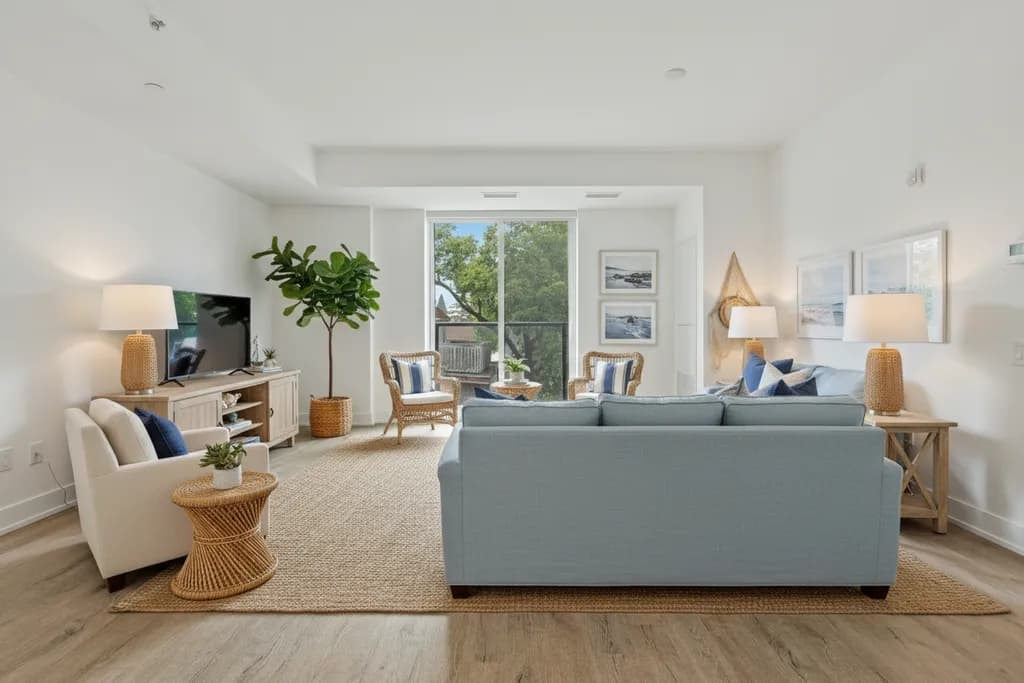
Redesign your room in Biophilic
Snap it, pick a style, see it redesigned in about 30 seconds.
Free to try · 3-day free trial on annual · Cancel anytime
