
Style guide
Minimalist interior design: the rules and the palette
Less but better: every object earns its place
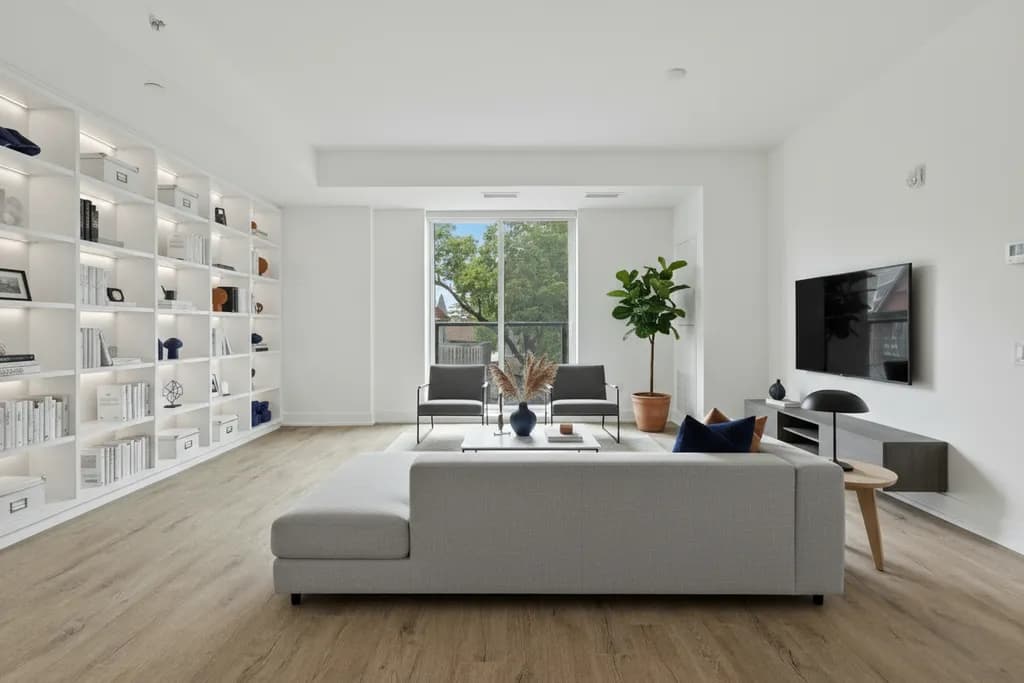
Minimalist interior design is a style that strips a room to its essentials: a few functional furniture pieces, a restrained monochrome palette of white, gray and black, empty surfaces, and hidden storage. It values open space, natural light and quality over quantity, so every object in the room has a clear purpose.
Free to try · 3-day free trial on annual · Cancel anytime
The Minimalist palette
See this Minimalist palette on a photo of your own room: Try Minimalist in RivAI
Try these exact colors on your walls with the paint color visualizer, or generate variations in the free palette generator.
What defines Minimalist design?
Minimalism in interiors grew from the 1960s minimalist art movement and the older Japanese principle of ma - the beauty of empty space. It treats the room itself as the main design element: walls, floor and light matter more than anything placed inside them.
A minimalist room typically holds a single sofa, one table and a bed or desk, each chosen for proportion and build quality rather than decoration. Storage is built in and invisible, so surfaces stay clear and the eye rests on a few deliberate shapes instead of many small objects.
The palette is narrow - white, off-white, light gray, black, and at most one warm neutral like sand or pale wood - which is why texture matters so much. Linen, raw concrete, matte paint and natural wool keep a minimalist room from feeling cold or unfinished.
Try Minimalist on your own space with AI interior design, interior color palette generator and interior design style quiz.
Signature materials
- Raw and polished concrete
- Matte lacquered surfaces
- Natural linen and wool
- Pale oak and birch
- Brushed stainless steel
- Large plain glass panels
Furniture & decor
- One low sofa in light gray or beige
- Platform bed without a headboard frame
- Single dining table with simple legs
- Built-in floor-to-ceiling storage
- One sculptural floor lamp
- A single large plant instead of decor
Mistakes to avoid
- Removing so much that the room has no storage, so clutter creeps back onto every surface.
- Going pure white with no texture, which makes the space feel sterile rather than serene.
- Buying cheap furniture - in minimalism every piece is visible, so low quality shows immediately.
- Keeping too many small decor items, which contradicts the style more than having none at all.
- Forgetting warmth: no wood, no textile and no plant makes a minimalist room feel like a showroom.
Minimalist on a budget
- Declutter before buying anything - minimalism is the one style where spending nothing is the first step.
- Invest in one excellent anchor piece like a sofa, and leave the rest of the room empty until you can afford quality.
- Use paint-grade plywood or IKEA carcasses with custom fronts for built-in-looking storage at a third of the cost.
- Choose one large plant in a plain pot instead of many decorative objects.
- Sell or donate what you remove; minimalism often funds itself.
Minimalist ideas by room
Minimalist FAQ
What colors does minimalist interior design use?
Minimalist rooms use a narrow monochrome base: pure white (#FAFAF8), light gray (#D6D6D2) and soft black (#2B2B2B). One warm neutral like sand or pale wood is allowed to keep the space from feeling cold, and bright colors are avoided almost entirely.
Is minimalist design practical for families with kids?
It can be, but only with serious hidden storage - floor-to-ceiling cabinets, under-bed drawers and closed toy storage. The style fails in family homes when there is nowhere to put daily clutter, so plan storage first and aesthetics second.
What is the difference between minimalist and Scandinavian design?
Scandinavian design adds warmth through candles, wool throws, plants and layered textiles, while minimalism removes more and decorates less. A Scandinavian room feels cozy; a minimalist room feels calm and empty, with fewer objects and a narrower palette.
Can I test minimalist design on my own room photo?
Yes. Upload a photo of your room in the RivAI iPhone app, select Minimalist from 43 styles, and see your space with clear surfaces, a tight neutral palette and hidden storage in about 30 seconds. RivAI is free to try, so you can compare it with warmer styles before you declutter.
Related styles
Last updated 2026-10-09
Redesign your room in Minimalist
Snap it, pick a style, see it redesigned in about 30 seconds.
Free to try · 3-day free trial on annual · Cancel anytime
