
Front yard landscaping ideas: 18 upgrades from weekend to full redo
By RivAI Team · · 13 min read
The short answer
The best front yard landscaping ideas start with structure: curved beds 4 to 6 ft deep, a path 36 to 48 in wide, and plants layered tall to short with evergreens doing most of the work. Then add lighting along the path, swap some lawn for groundcover or gravel, and finish with house numbers and planters by the door.
What are the best front yard landscaping ideas?
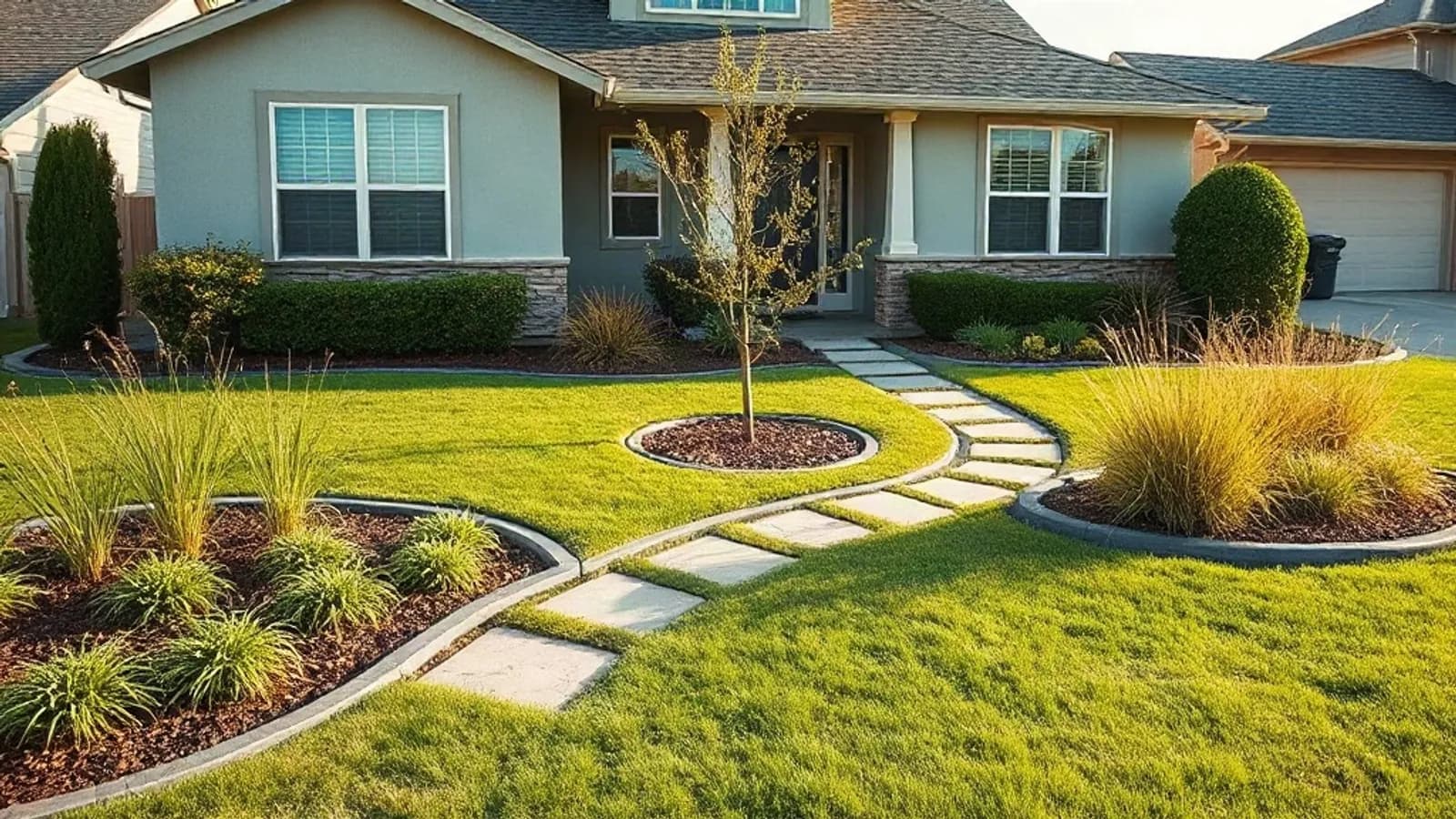
Good front yard landscaping ideas share one trait: they fix the structure first and the plants second. Start with beds deep enough to layer plants, ideally 4 to 6 ft (1.2 to 1.8 m) from the lawn edge back to the house, with clean curved or steel edges and 2 to 3 in (5 to 8 cm) of mulch. Give the front door a path 36 to 48 in (91 to 122 cm) wide, lit every 6 to 8 ft (1.8 to 2.4 m).
For planting, set evergreen shrubs 2 to 3 ft (60 to 90 cm) off the foundation, then layer grasses and perennials in front, repeating each plant in groups of three or five. Shrink the lawn where it struggles and swap in clover, gravel or a low groundcover. Small details pay off fastest: readable house numbers, a planted mailbox post and a pair of big pots by the door. The trade-off is time. Beds and paths take a few weekends, and plants need a couple of seasons to fill in.
How do you design front yard beds and borders?
Beds carry most front of home landscape ideas, because they decide where plants live and where the mower stops. Get the shape and depth right and almost any plant list looks intentional. If you'd rather start from a finished look, browse front yard design ideas by style; the four moves below are the structure underneath all of them.
1. Curve the bed edges (or make them dead straight)
Wide, slow curves look calmer than wiggles, and they're easier to mow along. Lay a garden hose on the lawn, nudge it until the shape looks right from the street, then cut along it with a half-moon edger. Modern houses suit straight lines that echo the walls and windows. Pick one approach per bed; mixing both looks unplanned.
2. Make beds 4 to 6 ft deep
Builder beds are often a skinny strip about 2 ft (60 cm) deep, which fits one row of shrubs and nothing else. A good rule of thumb is 4 to 6 ft (1.2 to 1.8 m), enough room for three layers of planting. On a two-story house, lean toward the deeper end so the planting doesn't look like a fringe along the bottom of a tall wall.
3. Edge with steel or brick
Hard edging keeps grass out of the bed and draws a crisp line even in winter. Steel edging at least 4 in (10 cm) deep disappears into the soil and suits contemporary front yards. On traditional houses, brick laid flat works well and doubles as a mowing strip, so the mower wheel rides on it and you rarely need to trim.
4. Top beds with 2 to 3 in of mulch
Shredded bark at 2 to 3 in (5 to 8 cm) deep holds moisture and keeps weeds down. Pile it deeper and you start smothering roots. Leave a hand's width of bare soil around shrub stems and tree trunks, since the cone-shaped mulch volcano you see in parking lots rots bark. Natural dark brown sits better against most house colors than dyed red.
How should a front path and entry be laid out?
Every visitor uses the path, so it earns attention before the plants do. Many houses come with a narrow concrete walk running straight from the driveway to the door. You can improve it a lot without tearing anything out.
5. Widen the path to 36 to 48 in
Aim for 48 in (122 cm) if you want two people to walk side by side; treat 36 in (91 cm) as the working minimum for one person carrying groceries. If replacing the concrete isn't in the budget, add a border of pavers or flagstone along each side of the old walk. That widens it and changes its look in one job.
6. Match the path material to the house
- Large concrete pavers, or poured concrete with saw-cut joints, for modern and contemporary houses.
- Brick in herringbone or running bond on colonial and traditional fronts.
- Irregular flagstone for cottage, Mediterranean and rustic looks.
- Gravel with a steel edge is the easiest to lay yourself, but it scatters and rolls badly under strollers and wheelchairs, so keep it off the main route to the door if anyone in the house needs a smooth surface.
7. Light the path every 6 to 8 ft
Low path lights spaced 6 to 8 ft (1.8 to 2.4 m) apart give pools of light that just overlap, which is all a walkway needs. Stagger them on alternating sides instead of lining both edges like a runway. Warm bulbs around 2700K look like home; cool white makes a front yard feel like a parking lot. Add one uplight on the tree or the best stretch of wall and stop there.
8. Give the path a landing at the door
A path that ends at a single narrow step feels cramped. Widen the area at the foot of the steps into a small landing, roughly 5 ft (1.5 m) deep, so two people can stand there while the door opens. It also gives you a home for the planters in idea 18.
What should you replace bushes with in front of your house?
Replace a wall of overgrown bushes with a layered mix: a few small evergreen shrubs for year-round shape, ornamental grasses for movement and perennials for color, all set 2 to 3 ft (60 to 90 cm) off the foundation. What thrives depends on your climate, so check your USDA hardiness zone and your local extension service's plant lists before you buy anything below.
9. Pull foundation plants 2 to 3 ft off the wall
Shrubs jammed against the house trap moisture on siding, block access to gutters and windows, and grow lopsided toward the light. Read the mature width on the plant tag, halve it, and add a foot (30 cm): that's roughly how far the trunk should sit from the wall. For most small shrubs it lands at 2 to 3 ft (60 to 90 cm).
10. Layer tall, middle and ground
Think in three rows, back to front. At the back, compact evergreens such as dwarf yew, inkberry holly or dwarf boxwood hold the shape all year. Ornamental grasses like little bluestem or a clumping fountain grass add movement in the middle. Up front go low perennials like catmint, coneflower or salvia, plus a groundcover where the bed meets the lawn. Treat these as examples: confirm each one against your hardiness zone, sun and soil, and skip anything listed as invasive where you live.
11. Use the rule of 3 (and repeat yourself)
The rule of 3 in landscaping is designers' shorthand for two habits. Plant in odd-numbered groups (three, five, seven) so clusters look natural instead of lined up. Then repeat the same plant at least three times across the yard, so the eye connects one side of the house to the other. One of everything from the garden center reads as a collection; three drifts of the same grass read as a design.
12. Add one small tree at least 15 ft from the house
A single small tree gives the front yard height and frames the house from the street. As a rule of thumb, plant it at least 15 ft (4.5 m) from the foundation, farther for anything that spreads wide, and well clear of sewer lines and overhead wires. Serviceberry, Japanese maple and dogwood are common picks. Check that the variety suits your hardiness zone and that its mature size fits the spot before you dig.
See these colors on your own walls: Try this palette in RivAI
What can you plant instead of a front lawn?
Less lawn means less mowing, watering and fertilizer, and the front is the easiest place to start because it's rarely where kids play. You don't have to rip it all out. Shrinking the lawn to one clean, simple shape and widening the beds around it already counts.
13. Clover or a clover-grass mix
White clover and microclover stay green through summer with less water than most turf, need no fertilizer, and take light foot traffic. Overseed into the existing grass in spring or early fall. Clover flowers draw bees, so mow before it blooms near the path if anyone in the house is allergic, and expect a softer, shaggier look than a manicured lawn.
14. Gravel garden with drought-tolerant plants
Swap a patch of lawn for 2 to 3 in (5 to 8 cm) of pea gravel or decomposed granite, edged in steel, then plant through it with grasses, lavender or sedum. Gravel is the backbone of most modern front yard ideas and works best in dry climates. Where it snows, keep gravel away from the driveway edge, or the shovel will throw it onto the lawn every winter.
15. Groundcover between stepping stones
For a strip where grass never grows well, or the gaps between path stones, use a low, walkable groundcover such as creeping thyme, sedum or a native sedge. Set small plugs 8 to 12 in (20 to 30 cm) apart and they'll knit together within a season or two. As with every plant here, check your hardiness zone and local invasive lists first; creeping Jenny, for one, spreads hard in wet soil.
Which small front yard ideas make the biggest difference?
Small details are the quickest front yard ideas to finish, and they're what people notice from the curb. Most fit into a Saturday.
16. Bigger house numbers
Numbers should be readable from the street at night. A good starting size is 4 to 6 in (10 to 15 cm) tall for a house near the road, larger if it sits far back; some towns set a minimum, so check before you buy. Mount them by the door where the porch light hits them, or on a post beside the path.
17. Plant the mailbox
A small ring of perennials or groundcover around the mailbox post finishes the street edge and hides string-trimmer scars. Keep it low and leave the delivery side clear. Swapping a leaning post or dented box for one that matches your door hardware costs little and reads as care.
18. A matched pair of planters by the door
Two big pots look intentional; one small pot looks forgotten. For a standard front door, choose pots at least 18 to 24 in (46 to 61 cm) across, with a small evergreen for winter and trailing annuals in summer. Pull the pot color from your door or shutters, or settle those first with these exterior house color ideas.
Pick your first project by the time you actually have, not by the photo you like most.
| Project | Effort | Try it if |
|---|---|---|
| Planters, house numbers, mailbox | One weekend | You want visible change before spending on plants |
| Re-edge and mulch existing beds | One weekend | The beds look messy but the plants are healthy |
| Low-voltage path lighting | One weekend | The path is fine but dark after sunset |
| Deepen beds to 4-6 ft | Two to three weekends | Your shrubs sit in a narrow strip against the house |
| Replace overgrown foundation shrubs | Two to four weekends | Bushes cover the windows or touch the siding |
| Clover or groundcover instead of lawn | A season to establish | The grass is patchy and you'd rather not mow it |
| Gravel garden | Two to three weekends | You live somewhere dry and the lawn browns every summer |
| Widen or rebuild the path | Several weekends, or hire help | The walk is cracked, narrow or in the wrong place |
If the house itself needs work too, the exterior home makeover guide covers siding, trim and roof changes and the order to do them in, so you don't plant a new bed right where the painter's ladder has to go.
How can you preview front yard ideas on your own house?
Plants are cheap to change on paper and expensive to change in the ground, so it helps to see a direction first. In RivAI, take a daylight photo of the house from the street, open Exterior redesign or Garden, and set the room type to Front Yard. Pick a style such as Modern, Mediterranean, Japanese, Coastal or French Country, and choose Keep Structure so the house and layout stay put.
You can add a short prompt, for example "curved beds, ornamental grasses, stone path", and a Standard result takes about 30 seconds. Compare it with the before/after slider, then brush over a patch with Replace to try a different bed or path. Keep the limits in mind: it's a picture, not a planting plan, so there's no plant list, measurements or cost estimate. You get 2 free designs, free results carry a watermark, and the app is iPhone and iPad only. More on the AI garden design tool.
What should you skip when you redo a front yard?
Most front yard landscaping mistakes come from buying plants before deciding on structure. These are the ones worth avoiding:
- One of everything. A bed of 15 different plants looks like a garden center sale table; pick five to seven and repeat them.
- Shrubs that will outgrow the windows. Go by the mature height on the tag, not the size of the pot.
- Thin plastic edging, which heaves out of the ground after a winter or two.
- A shade tree 6 ft (1.8 m) from the house. Lovely for a few years, then a roof, gutter and foundation problem.
- Lawn on a steep slope or a strip too narrow to mow. Plant it.
- A yard of perennials only. When they die back, you're left with bare mulch for months, so keep evergreens and grasses carrying most of the structure.
- Buying plants straight off any picture, AI or magazine. Use images for direction, then check every plant against your zone, sun and soil.
FAQ
How do I redo my front yard?
Work from structure to detail. Photograph the yard from the street, decide what stays, then mark new bed lines with a hose and sort out the path. Have utility lines marked, remove dead or overgrown shrubs, improve the soil and edge the beds. Plant trees and shrubs first, then grasses and perennials, mulch, and finish with lighting, numbers and pots.
What is the 70/30 garden rule?
It's a loose guideline that people apply in different ways rather than a fixed standard. The common version: about 70 percent of the planting is structure (evergreen shrubs, grasses, hardscape) that looks decent all year, and about 30 percent is seasonal color from perennials, bulbs and annuals. Use it as a check against a front yard that looks bare all winter.
What garden design trends are worth trying in 2026?
In our view, the practical ones: native and pollinator-friendly planting, smaller lawns, gravel gardens in dry regions, and deep layered beds instead of a single row of shrubs. All of them cut maintenance once established. Skip anything that depends on one fashionable plant or color, because it dates fast and undoing it means a full replant.
How much does a professional front yard design cost?
It varies by region and scope. As one reference, the online service [Yardzen lists design packages](https://www.yardzen.com/packages) from $995 (Essential) through $1,395 (Classic) and $1,995 (Signature) to $3,495 (Premium) for backyards, checked October 2026; front-yard pricing may differ. Plants and installation are extra. To sketch a direction before paying anyone, see these [free AI landscape design options](/blog/free-ai-landscape-design).

RivAI Team
We build RivAI, the AI home design app for iPhone, at PixelPort LLC. RivAI is our product, so read our picks with that in mind: we take no payment for placements, and every product claim is checked against the app. About us · Editorial policy.
Published · Last updated
- #landscaping
- #front yard
- #curb appeal
- #garden ideas
Keep reading
 Inspiration
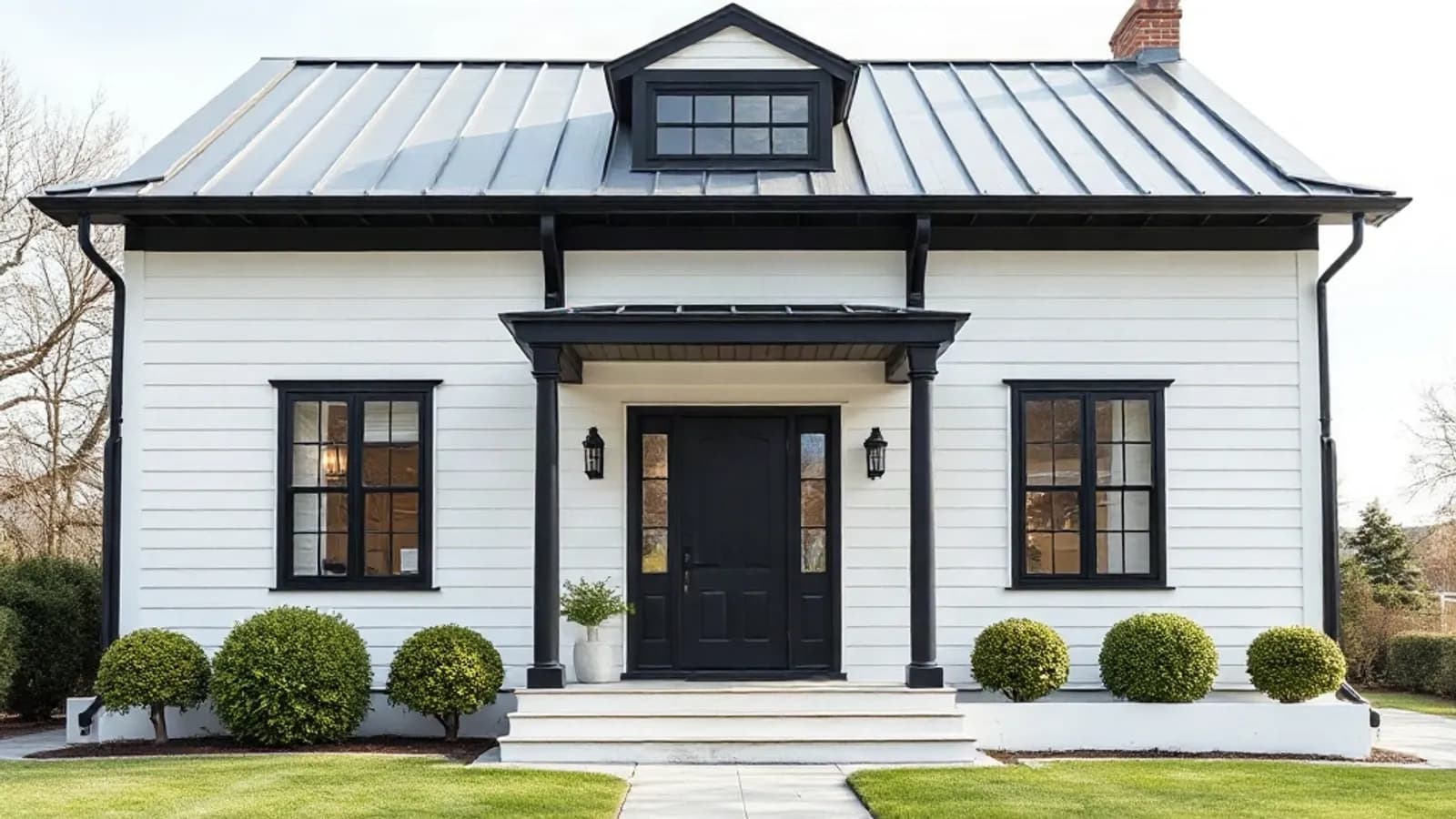
White house with black trim: 10 ideas and the exact paint colors
Black sashes, a black door and black gutters make a white house look sharp. Here are 10 ways to use them, with hex codes, LRV values and the mistakes to skip.
· 11 min read
 Inspiration
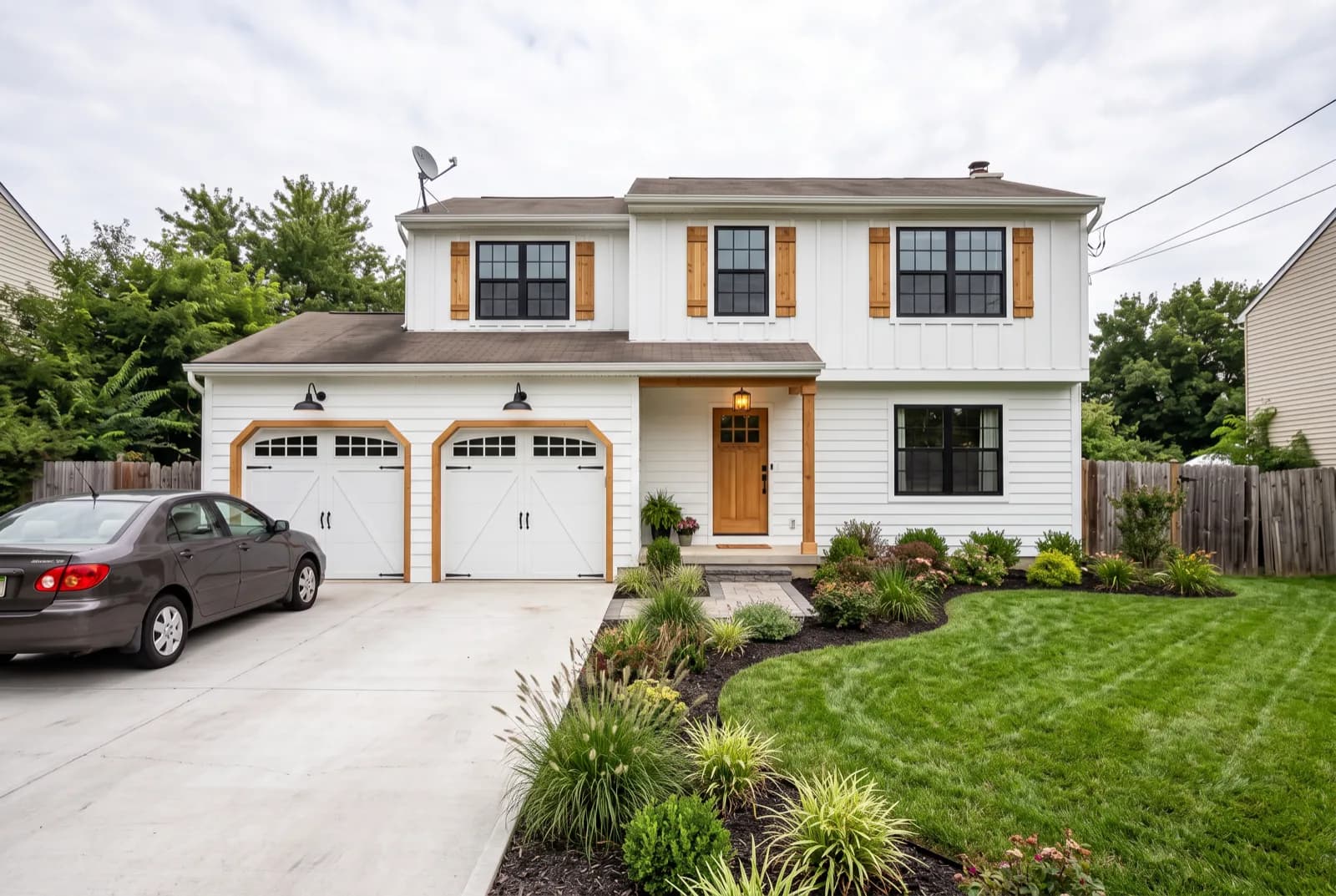
Exterior house colors: 12 combinations with hex codes
Twelve exterior house color combinations for body, trim and front door, each with hex codes and the house styles they suit. Plus the 2026 brand picks and how to test before you pay for paint.
· 10 min read
 Inspiration
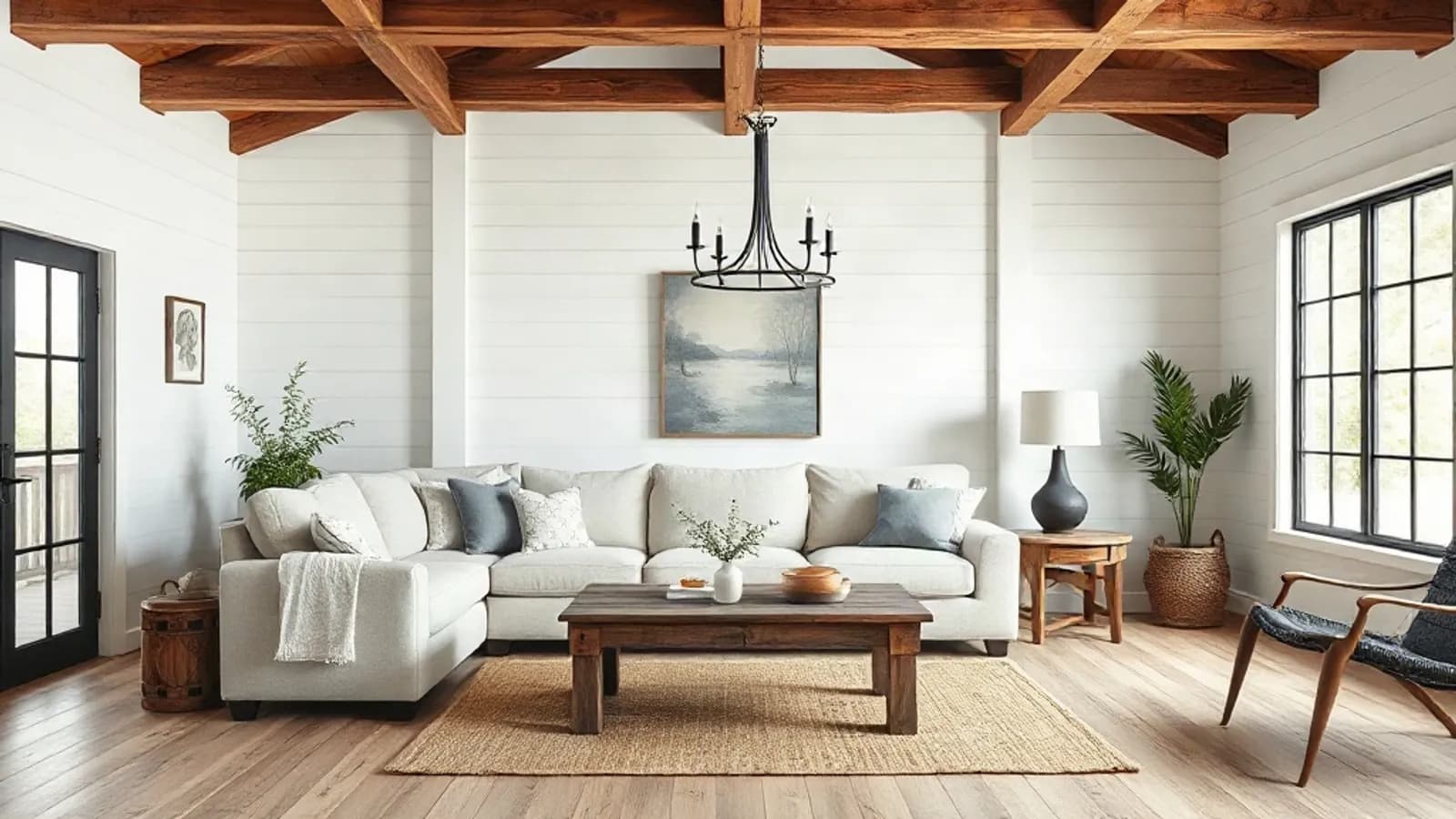
Modern farmhouse living room ideas: 15 warm, uncluttered looks
Fifteen modern farmhouse living room ideas grouped by walls, furniture, lighting, textiles and the warmer 2026 update. Each one comes with a size, bulb temperature or hex code, plus a short list of what to skip.
· 10 min read
Try this on your own room
Snap it, pick a style, see it redesigned in about 30 seconds.
Free to try · 3-day free trial on annual · Cancel anytime
