
Style guide
Zen interior design: the style guide
Stillness as design: open space, soft light, quiet mind
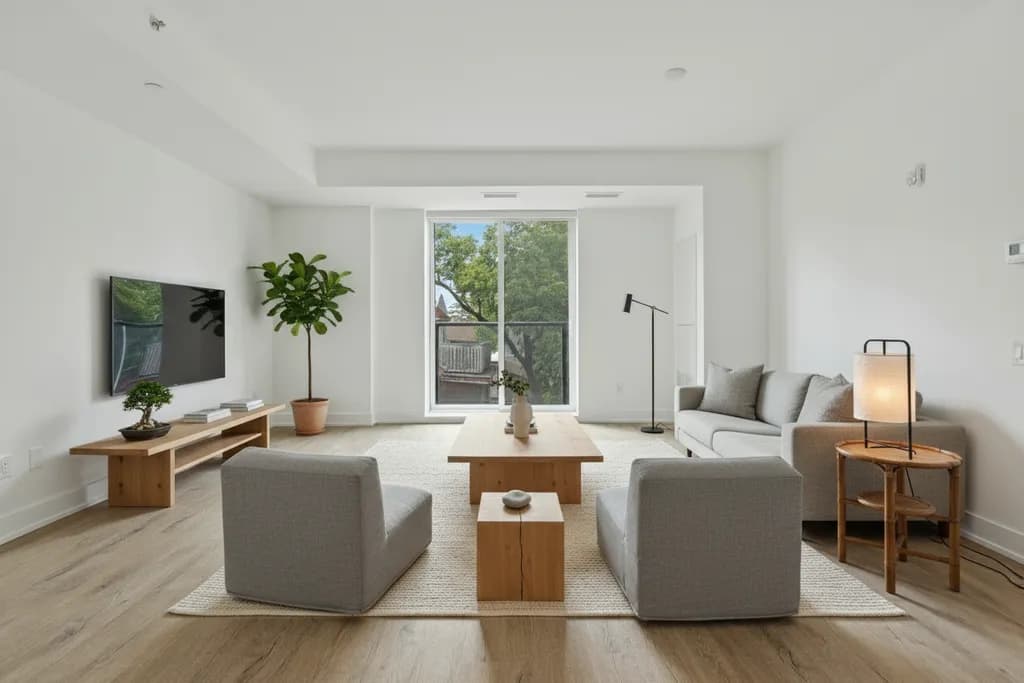
Zen interior design is a minimalist, meditation-inspired style that creates calm through open space, symmetry and natural elements. It uses a muted palette of stone gray, sand and off-white, low and simple furniture, indoor plants, water or stone features, and soft diffused light, removing everything that distracts the mind.
Free to try · 3-day free trial on annual · Cancel anytime
The Zen palette
See this Zen palette on a photo of your own room: Try Zen in RivAI
Try these exact colors on your walls with the paint color visualizer, or generate variations in the free palette generator.
What defines Zen design?
Zen design descends from the aesthetics of Zen Buddhist temples and tea rooms, where empty space is treated as a positive element that calms the mind. Unlike a purely visual style, Zen interiors are designed around how a room feels to sit in: quiet, balanced and free of visual noise.
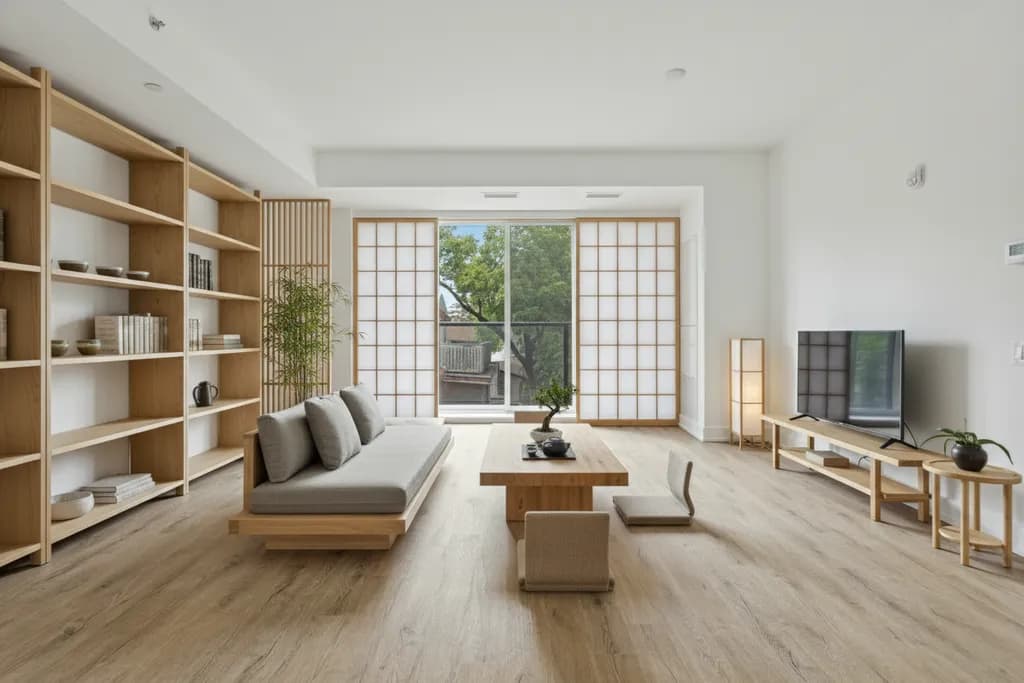
The style relies on symmetry and low horizontal lines - a low bed, a floor cushion, a single stone or plant as the focal point. Surfaces are natural and matte: smooth stone, pale wood, cotton and paper, with no glossy or synthetic finishes.
Where Japanese style includes craft, ceramics and lived-in warmth, Zen is more austere and meditative. Color stays within a narrow band of off-white, sand, stone gray and soft green, and the only decorations tend to be a plant, a stone arrangement or a small water feature.
Try Zen on your own space with AI interior design, interior color palette generator, interior design style quiz, Japandi vs Scandinavian and Japandi style.
Signature materials
- Smooth river stone and pebble
- Pale bamboo and light wood
- Natural cotton and hemp fabric
- Rice paper for lamps and screens
- Matte clay and unglazed pottery
Furniture & decor
- Low platform bed with plain bedding
- Meditation cushion or floor seat
- Simple low bench in pale wood
- Paper floor lamp with warm light
- A single bonsai or bamboo plant
- Small indoor water or stone feature
Mistakes to avoid
- Adding Buddha statues, incense burners and Asian motifs everywhere, which turns calm into theme decor.
- Keeping electronics, cables and screens visible in a style built around mental quiet.
- Using cold white LED lighting instead of warm, diffused light at 2700K or lower.
- Filling the room with many small plants when one or two well-placed ones create more stillness.
- Choosing glossy tiles and shiny surfaces that reflect light harshly and break the matte calm.
Zen on a budget
- Declutter and hide cables first - Zen costs almost nothing because removal is the main tool.
- Swap bulbs for warm 2700K ones and add one paper lamp before buying any furniture.
- Collect smooth stones or a branch outdoors and arrange them in a plain bowl as a free focal point.
- Choose a single affordable bamboo plant instead of many small decorations.
- Make floor seating with firm cushions and a cotton cover rather than buying specialty meditation furniture.
Zen ideas by room
Zen FAQ
What is the difference between Zen and minimalist design?
Minimalism is about owning less and clean surfaces, while Zen is about mental stillness - symmetry, natural elements like stone and plants, and warm diffused light. A minimalist room can feel sharp and graphic; a Zen room should feel soft and meditative.
What colors create a Zen atmosphere?
Stay within warm off-white (#F1EEE6), stone gray (#9B9B93) and sand (#D3C5A5), with soft moss green (#7D8A6F) from living plants as the only real accent. Avoid saturated colors, pure black contrasts and shiny metallics.
Which room is best suited to Zen style?
The bedroom benefits most, because Zen's low bed, warm light and lack of screens directly support sleep. A Zen corner also works well in a living room or office - even one decluttered wall with a floor cushion and a plant changes how the room feels.
Can I preview a Zen redesign of my room with AI?
Yes. Take a photo of your room in the RivAI iPhone app, select Zen from 43 styles, and see open space, stone, pale wood and soft light on your own room in about 30 seconds. RivAI is free to try, so you can see how calm the room feels before clearing it out.
Related styles
Last updated 2026-10-09
Redesign your room in Zen
Snap it, pick a style, see it redesigned in about 30 seconds.
Free to try · 3-day free trial on annual · Cancel anytime
