
Japandi vs Scandinavian: what's the difference?
By RivAI Team · · 6 min read
The short answer
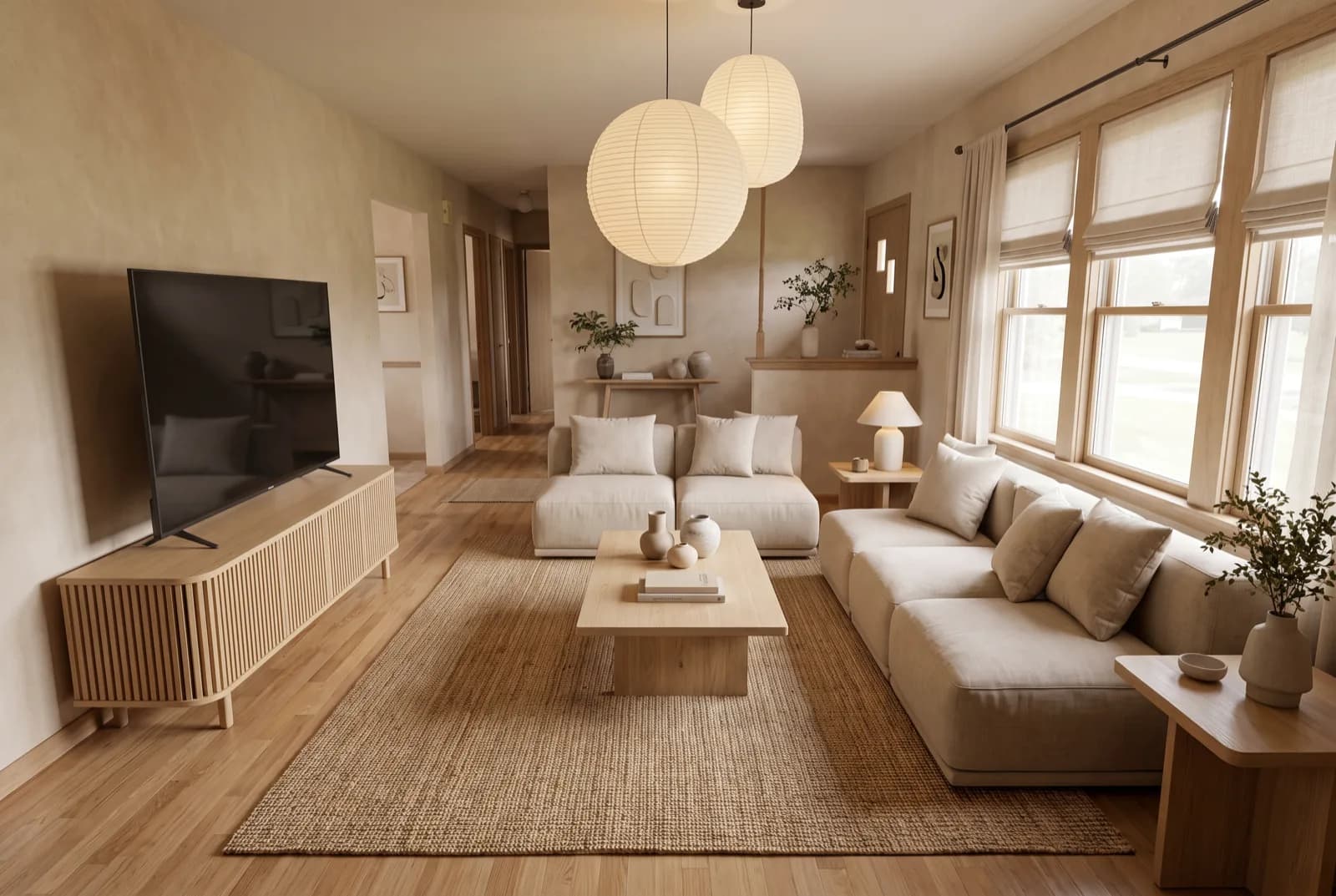
Scandinavian design is bright, airy and cozy: white walls, pale oak, soft wool and a few playful accents. Japandi blends that Nordic base with Japanese restraint, so it runs lower, earthier and quieter: warm greige walls, mixed light and dark woods, linen, stoneware and almost no decoration. Same calm, different temperature.
What is Scandinavian design, in one paragraph?
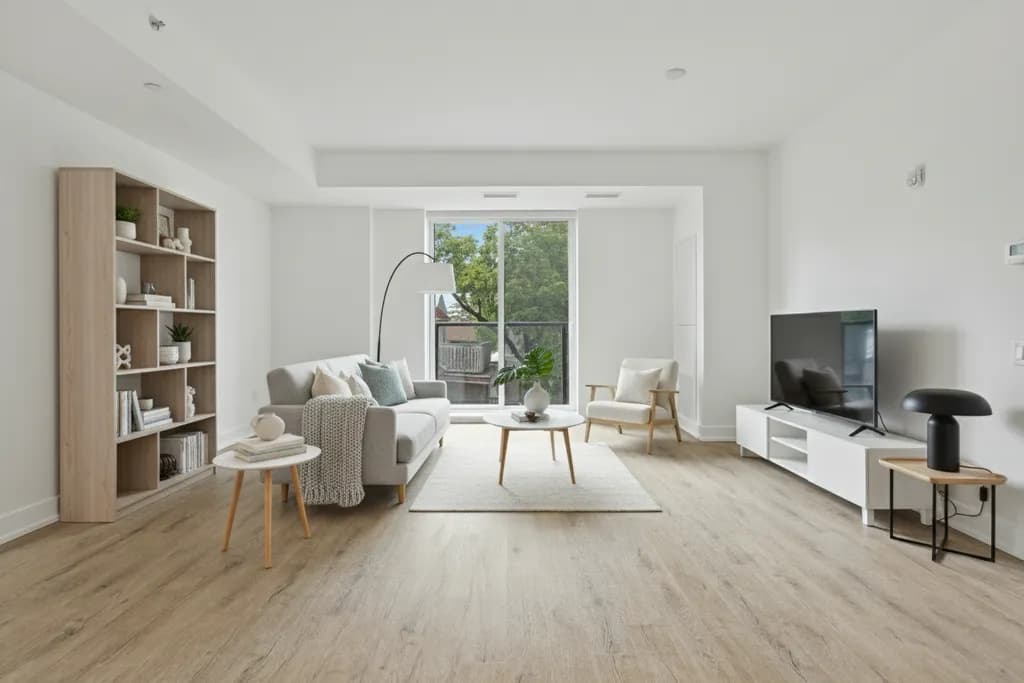
Scandinavian design grew out of Sweden, Denmark, Norway and Finland, where long dark winters made daylight precious. Rooms are planned to bounce as much light as possible: warm white walls, pale oak or ash floors, light gray upholstery and very little clutter. Warmth comes from texture rather than color, through wool throws, sheepskin, knitted cushions and candles. The goal is hygge, a deliberate coziness, so a good Scandinavian room feels relaxed and lived-in, never sterile.
What is Japandi, and where does it come from?
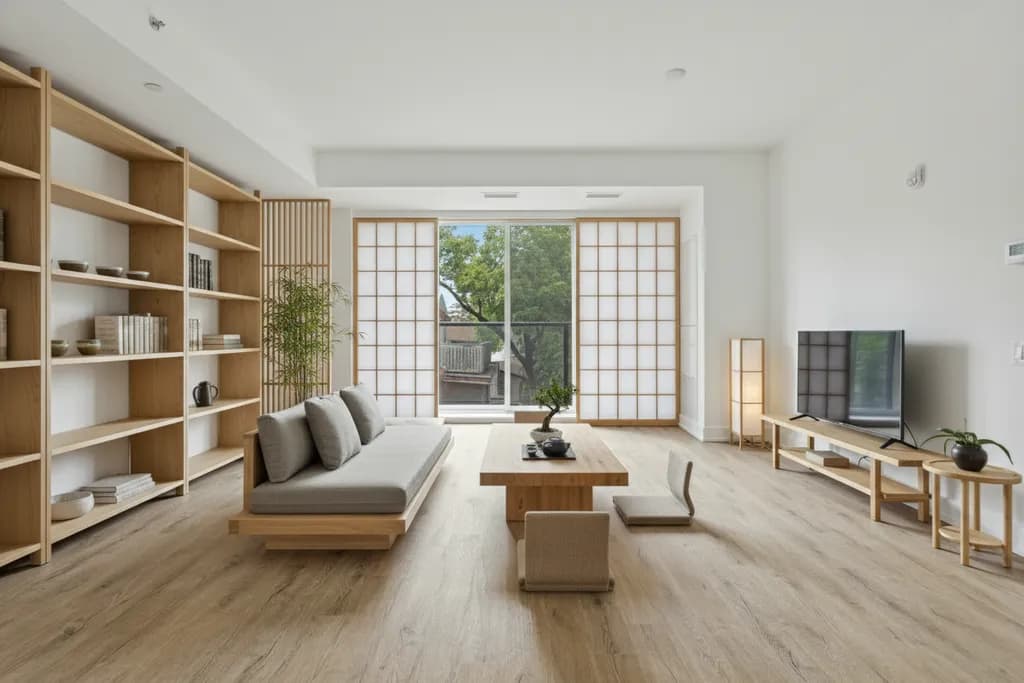
Japandi is a hybrid of Japanese and Scandinavian interiors. The two traditions share a respect for craft, natural materials and empty space, so they mix easily. Japandi keeps the Nordic comfort but borrows the Japanese idea of wabi-sabi: beauty in imperfect, handmade and aged things. In practice that means lower furniture, a warmer and earthier palette, darker woods alongside light ones, and decoration edited down to a single branch in a vase or one ceramic bowl on a bare table.
Scandinavian asks how to make a room cozy. Japandi asks what the room can do without.
How do the two styles compare side by side?
| Element | Scandinavian | Japandi |
|---|---|---|
| Palette | Warm whites, soft grays, pale wood, one muted accent | Greige, clay, rice-paper white, charcoal, muted green |
| Wood tones | Light only: oak, ash, birch, pine | Light and dark mixed: ash or oak with walnut or smoked oak |
| Furniture height | Standard: sofa seat about 17 to 19 in (43 to 48 cm) | Low: sofa seat about 14 to 16 in (36 to 41 cm), floor cushions |
| Textiles | Wool, sheepskin, chunky knits, linen | Linen, cotton, washed hemp, bouclé in small doses |
| Decor | Candles, plants, prints, a few styled objects | One ikebana stem, handmade stoneware, paper lanterns |
| Mood | Bright, cozy, sociable | Grounded, quiet, contemplative |
Which colors define each style?
The quickest tell is wall color. Scandinavian walls sit near pure white so the room reflects maximum daylight; Japandi walls drop a step warmer into greige or rice-paper beige, which reads softer in lamplight. Scandinavian accents stay cool and muted, often sage or dusty blue. Japandi accents come from nature: moss green, clay and an almost-black charcoal used on frames, lamp bases and a single dark wood piece.
See these colors on your own walls: Try this palette in RivAI
See these colors on your own walls: Try this palette in RivAI
Want a palette built for your exact room? The free palette generator returns five hex codes for any style and room, and the paint color guide covers testing them against your light.
How do wood tones and furniture differ?
Scandinavian rooms commit to one pale wood family, usually white oak, ash or birch, and avoid orange-toned woods. Furniture is standard height with slim tapered legs: a spindle-back chair, a round coffee table, a low-profile sofa at regular seat height.
Japandi deliberately contrasts light and dark. A pale ash floor might carry a walnut sideboard and a smoked oak bench. Furniture sits closer to the ground, with solid or block bases instead of spindly legs, and pieces are fewer and heavier-looking. A low platform bed, a floor-level coffee table around 12 to 14 in (30 to 36 cm) high, and a sofa with a deep, low seat are typical.
- Scandinavian staples: pale oak dining table, wishbone or spindle chairs, paper pendant, wool rug, open shelving.
- Japandi staples: low platform bed, slatted wood screen, shoji-style paper lantern, stoneware vases, jute or tatami-style mat.
- Shared ground: linen curtains, matte finishes, warm 2700K bulbs, hidden storage, no glossy surfaces.
Which style suits your room and lifestyle?
Choose Scandinavian if your room is short on daylight, you have kids or pets, or you like a sociable space with throws, plants and a few personal objects on show. Its bright palette rescues dim rooms, and its washable textiles forgive daily life. The Scandinavian living room ideas page shows how far the look stretches.
Choose Japandi if your room already gets good light, you are comfortable living with very few objects, and you want a calmer, more grounded mood. It is especially strong in bedrooms, where low furniture and warm neutrals help a room wind down; see Japanese bedroom ideas for the purer version. If you are still unsure, the 60-second style quiz will point you one way or the other.
How can you preview Japandi or Scandinavian on your own room?
RivAI does not have a style literally named Japandi, so be honest with yourself about the workflow. The closest route is to photograph your room once, render it in Scandinavian, then render the same photo in Japanese or Zen, and compare the two on the before/after slider. The Japandi answer usually sits between them: take the palette and low furniture from one, the pale wood and textiles from the other.
- Take a horizontal daylight photo of the room from a corner, as described in the room photography guide.
- In RivAI, choose Keep Structure so the layout stays put and only finishes and furniture change.
- Render Scandinavian, then Japanese or Zen, from the same photo; each takes about 30 seconds.
- For a true Japandi blend, use Style Transfer with a Japandi reference photo you like, and the app applies its look to your room.
- Fine-tune with Paint using an exact hex such as #EEE8DD, or swap flooring with Floor to test pale ash against smoked oak.
The full walkthrough is in how to redesign a room with AI, and RivAI is free to try on iPhone.
FAQ
Is Japandi just Scandinavian with darker wood?
No. Darker wood is one signal, but Japandi also lowers the furniture, warms the wall color to greige, and cuts decoration much harder. A Scandinavian room with a walnut table is still Scandinavian if it keeps the white walls, throws and styled shelves.
Can I mix Scandinavian and Japandi in one home?
Yes, and it works well because they share pale wood, linen and matte finishes. A common split is Scandinavian in the living room and kitchen, where brightness and comfort matter, and Japandi in the bedroom, where a lower, quieter look helps.
What paint color works for a Japandi living room?
A warm off-white or light greige such as #EEE8DD or #E4DCCD keeps the room calm without the starkness of pure white. Pair it with matching or slightly lighter ceilings and avoid glossy finishes; matte or eggshell suits the style.
Does RivAI have a Japandi style?
Not by that name. Render the same photo in Scandinavian and in Japanese or Zen to see both halves, or use Style Transfer with a Japandi reference photo to apply its look to your room.
Which style is easier on a budget?
Scandinavian is usually easier, because pale flat-pack furniture and wool or linen basics are widely available. Japandi relies on fewer but more substantial pieces, such as solid wood and handmade ceramics, so it costs less in quantity and more per item.

RivAI Team
We build RivAI, the AI home design app for iPhone, at PixelPort LLC. RivAI is our product, so read our picks with that in mind: we take no payment for placements, and every product claim is checked against the app. About us · Editorial policy.
Published · Last updated
- #japandi
- #scandinavian
- #style comparison
- #living room
- #color palettes
Keep reading
 Inspiration
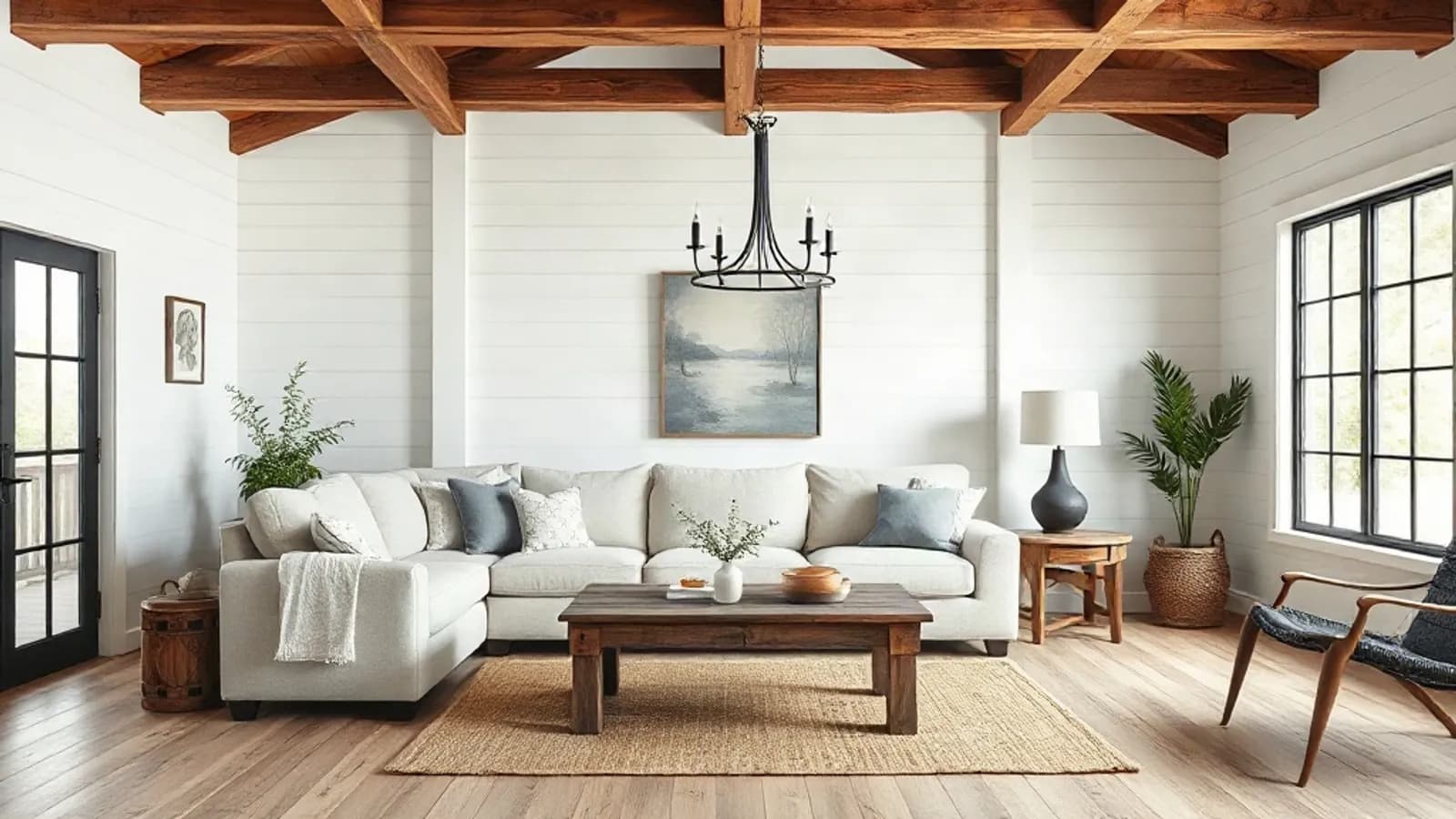
Modern farmhouse living room ideas: 15 warm, uncluttered looks
Fifteen modern farmhouse living room ideas grouped by walls, furniture, lighting, textiles and the warmer 2026 update. Each one comes with a size, bulb temperature or hex code, plus a short list of what to skip.
· 10 min read
 Inspiration
Living room color ideas: 12 palettes with hex codes
Twelve living room color palettes with hex codes, grouped from warm neutrals to the earthy browns paint brands picked for 2026. Each one notes the light and room size it suits.
· 11 min read
InspirationJapandi style: the rules, the palette and room-by-room ideas
Japandi mixes Japanese restraint with Scandinavian comfort. Here are the seven guidelines, the colors with hex codes, and how to apply the look room by room.
· 10 min read
Try this on your own room
Snap it, pick a style, see it redesigned in about 30 seconds.
Free to try · 3-day free trial on annual · Cancel anytime
