
Style guide
Japanese interior design: the wabi-sabi style guide
Wabi-sabi calm: low furniture, natural wood, quiet imperfection
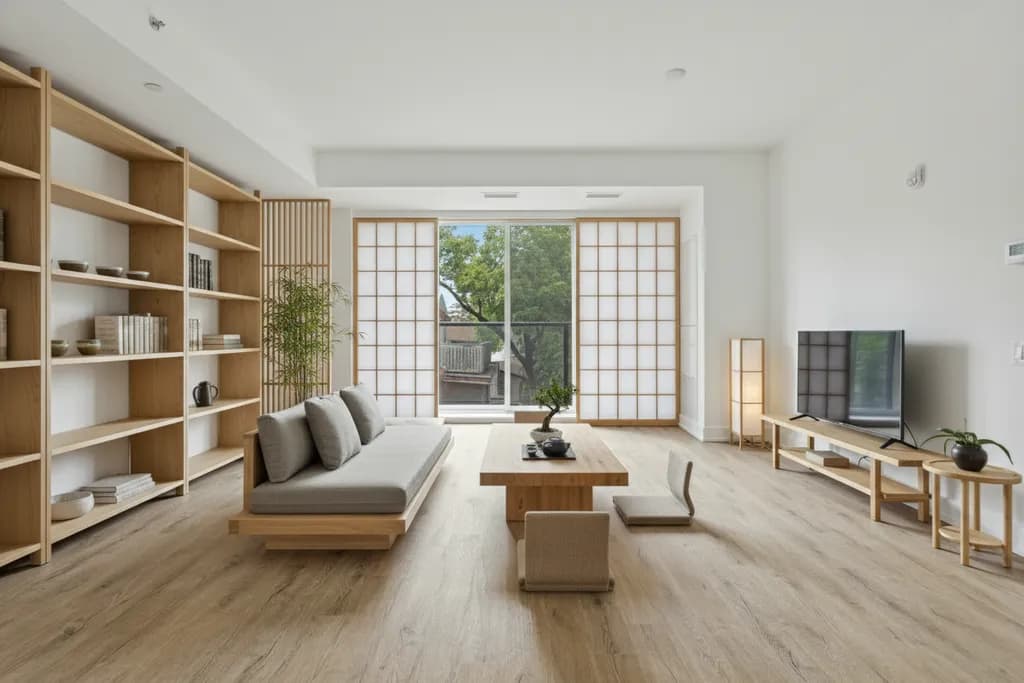
Japanese interior design is a style built on simplicity, natural materials and a close relationship with nature. It features low furniture, tatami mats, shoji screens, dark and light wood contrast, and a muted palette of cream, charcoal and warm brown, embracing wabi-sabi - the beauty of imperfection and age.
Free to try · 3-day free trial on annual · Cancel anytime
The Japanese palette
See this Japanese palette on a photo of your own room: Try Japanese in RivAI
Try these exact colors on your walls with the paint color visualizer, or generate variations in the free palette generator.
What defines Japanese design?
Traditional Japanese interiors developed over centuries around the idea that a room should serve many purposes and stay close to the floor: futons instead of tall beds, low chabudai tables, and cushions instead of chairs. Shoji screens diffuse daylight softly, and rooms open toward gardens rather than away from them.
Wabi-sabi is the philosophy underneath the style: a crack in a handmade ceramic bowl or the grain of unfinished cedar is a feature, not a flaw. This is why Japanese rooms favor handmade, natural and slightly irregular objects over glossy, mass-produced ones.
Compared with Zen style, Japanese interiors are warmer and more lived-in - they include craft objects, ceramics, calligraphy and family life. The palette mixes warm woods like cedar and walnut with cream plaster, charcoal ink tones and deep indigo textiles.
Try Japanese on your own space with AI interior design, interior color palette generator, interior design style quiz, Japandi vs Scandinavian and Japandi style.
Signature materials
- Cedar, cypress and bamboo wood
- Rice-paper shoji screens
- Tatami straw matting
- Handmade ceramic and stoneware
- Indigo-dyed cotton and linen
- Natural stone and pebble accents
Furniture & decor
- Low platform bed or futon
- Low wooden table with floor cushions
- Shoji room divider or sliding screen
- Tokonoma-style alcove with one artwork
- Tansu chest for storage
- A single ikebana flower arrangement
Mistakes to avoid
- Confusing Japanese style with generic Asian decor like red lanterns and dragon motifs.
- Using tall Western furniture, which breaks the grounded, low-to-the-floor proportions.
- Overfilling shelves - Japanese interiors display one or two objects and hide the rest.
- Choosing glossy lacquered finishes everywhere instead of matte, natural wood surfaces.
- Blocking windows with heavy drapes when the style depends on soft, diffused daylight.
Japanese on a budget
- Lower what you already own - swap a tall bed frame for a platform base to change the room's proportions cheaply.
- Use a paper floor lamp and one ceramic vase instead of buying a full set of new furniture.
- Hang a single scroll-style print or calligraphy piece rather than a gallery wall.
- Build a simple shoji-look divider from wood frames and translucent fabric for a fraction of the retail price.
- Choose unfinished or lightly oiled wood pieces, which are cheaper than lacquered ones and more authentic.
Japanese ideas by room
Japanese FAQ
What is wabi-sabi in interior design?
Wabi-sabi is the Japanese aesthetic of finding beauty in imperfection, age and natural irregularity. In practice it means handmade ceramics with uneven glaze, wood with visible grain, linen that wrinkles, and rooms that feel calm and lived-in rather than polished and new.
What is the difference between Japanese and Zen interior design?
Japanese style is a full cultural tradition with shoji screens, tatami, tansu chests and craft objects, while Zen is a narrower, more meditative offshoot focused on emptiness and stillness. Japanese rooms feel warm and personal; Zen rooms feel more austere and spare.
What colors define a Japanese interior?
The base is rice cream (#EFE6D5) and tatami straw (#C7B88A), warmed with cedar wood (#A97748) and grounded with charcoal ink (#33342F). Indigo blue (#2E3A59) appears in cushions and textiles as the traditional accent color.
Can I see my room redesigned in Japanese style?
Yes. Take a photo of your room in the RivAI iPhone app, choose the Japanese style from 43 available styles, and see low furniture, pale wood and paper-soft light in about 30 seconds. RivAI is free to try, so you can test the calm look before decluttering.
Related styles
Last updated 2026-10-09
Redesign your room in Japanese
Snap it, pick a style, see it redesigned in about 30 seconds.
Free to try · 3-day free trial on annual · Cancel anytime
