
Japandi style: the rules, the palette and room-by-room ideas
By RivAI Team · · 10 min read
The short answer
Japandi style is a blend of Japanese and Scandinavian interiors: low, simple furniture, light and dark wood together, linen and stoneware, a warm neutral palette of off-white, clay, oak, walnut, charcoal and muted green, and very little decoration. Every object earns its place, and the room feels calm, warm and lived-in rather than stark.
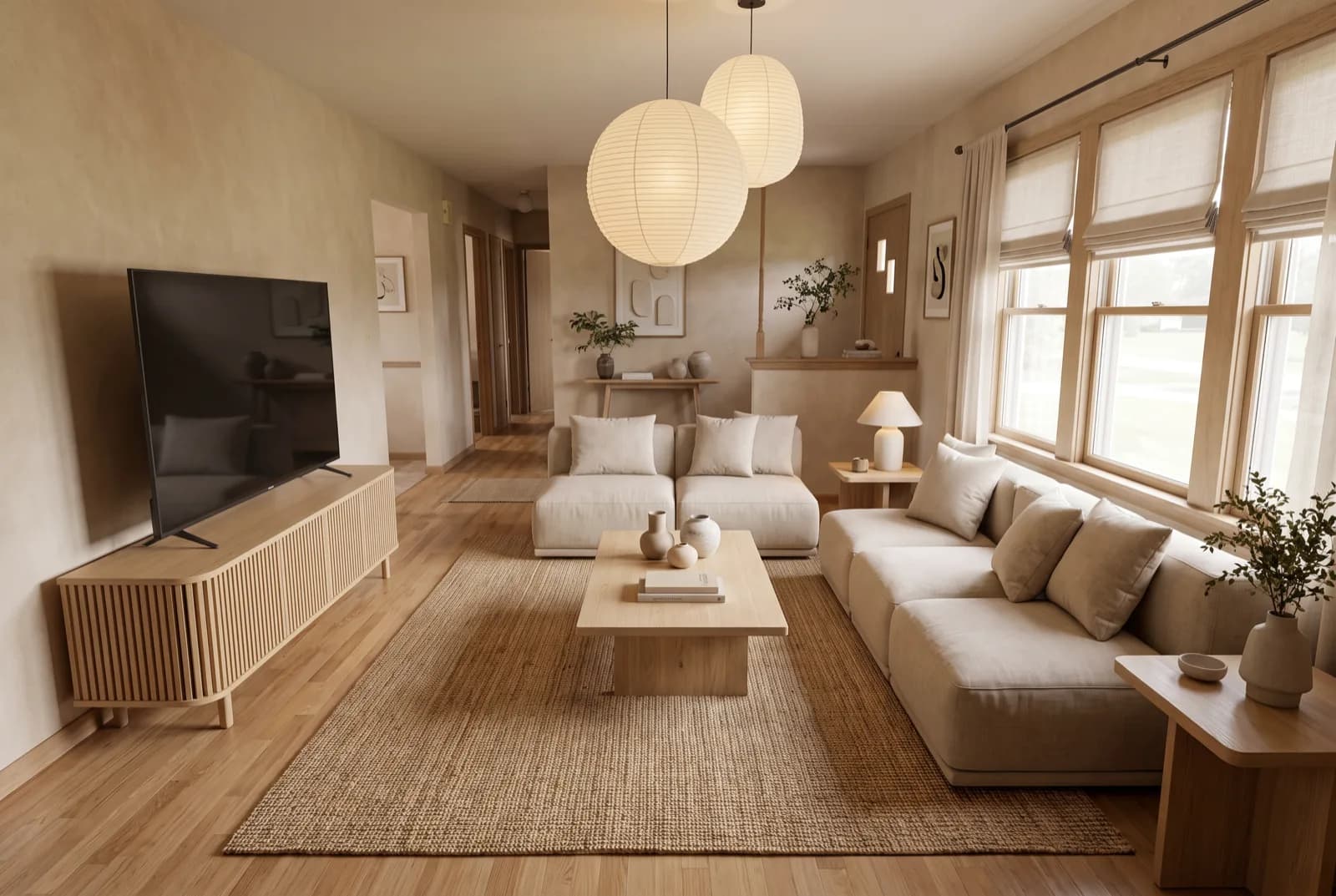
What is Japandi style?
Japandi style is a hybrid of Japanese and Scandinavian interiors: low, simple furniture, a warm neutral palette, light and dark woods side by side, and natural materials like linen, paper, wool and stoneware. The name blends Japan and Scandinavia, and it suits anyone who wants a calmer, cozier home without going stark. From the Nordic side it takes comfort, pale wood and practical storage. From the Japanese side it takes restraint, low lines and a respect for handmade, slightly imperfect things.
The result sits between two extremes. A purely Japanese room can feel austere to Western eyes, and a purely Scandinavian one can get busy with throws, candles and prints. Japandi keeps the warmth and drops the clutter. You'll recognize it by a few solid pieces, one dark wood accent, bare surfaces and soft, warm light. The trade-off is upkeep: the look depends on hiding everyday stuff, so it needs closed storage and the habit of putting things away.
| Trait | What it looks like in a room |
|---|---|
| Palette | Warm white, clay, greige, oak, walnut, charcoal, one muted green |
| Wood | A pale wood and a dark wood together, both matte or oiled |
| Furniture | Low, solid, few pieces; block bases instead of spindly legs |
| Textiles | Linen, cotton, wool, jute; plain weaves, no loud patterns |
| Decor | One branch, one ceramic, maybe one artwork per wall |
| Lighting | Paper or linen shades, warm 2700K bulbs, nothing glaring |
| Mood | Quiet, grounded, warm |
What are the 7 rules of Japandi home style?
Nobody wrote an official rulebook, so treat these as working guidelines. Break one on purpose and the room still reads as Japandi. Break four and you've drifted into plain minimalism or plain Scandinavian.
- Own less, and hide the rest. Closed cabinets, lidded baskets and drawers do the work; open shelves stay half empty.
- Go low. Sofas, beds and coffee tables sit closer to the floor than usual, which makes the ceiling feel higher.
- Pair a light wood with a dark one. Pale oak or ash for the big surfaces, walnut or smoked oak for one or two pieces.
- Keep colors warm and muted. Off-white, clay and greige carry the room; a moss or sage green is the only accent.
- Choose natural, matte materials (linen, wool, paper, stone, stoneware) over plastic, gloss and chrome.
- Let handmade things look handmade. An uneven glaze or a visible wood knot is the point, a small nod to the Japanese idea of wabi-sabi.
- Leave empty space on purpose. A bare wall or a clear tabletop is part of the design, not a gap waiting to be filled.
If a shelf needs dusting around its ornaments, it has too many ornaments.
Which colors and materials does Japandi interior design use?
Think of the palette as daylight on raw materials: paper, clay, two woods, ink and a leaf. Walls go warm white or light greige rather than bright white, because a slightly warmer wall looks softer in lamplight. Use the darker shades in small doses, on a sideboard, a picture frame or a lamp base, so they anchor the room without making it heavy.
See these colors on your own walls: Try this palette in RivAI
Want five shades tuned to your own room? The free palette generator builds a set with hex codes you can take to a paint store. Materials matter as much as color, so keep the list short and natural:
- Wood: white oak, ash, walnut, smoked oak, with an oiled or matte lacquer finish
- Linen and washed cotton for curtains, bedding and slipcovers
- Wool, jute or sisal rugs in flat or low-pile weaves
- Paper and rice-paper shades, the most recognizable Japandi light
- Stoneware and unglazed ceramics, ideally a little irregular
- Stone or stone-look tile, honed rather than polished
- Bamboo, rattan or cane, in small amounts only, so the room doesn't tip into a beach look
Can Japandi be dark?
Yes. Dark Japandi swaps the warm white walls for charcoal or deep taupe, leans on walnut and smoked oak, and uses a darker clay for textiles. It keeps the same rules (low furniture, few objects, natural materials), so it still reads as Japandi rather than moody maximalism. The look suits bedrooms, dens and rooms you mostly use in the evening.
See these colors on your own walls: Try this palette in RivAI
How is Japandi different from Scandinavian, Japanese and minimalist style?
All four share calm rooms and natural materials. The differences show up in temperature, height and how much stuff stays out:
| Feature | Japandi | Scandinavian | Japanese | Minimalist |
|---|---|---|---|---|
| Palette | Warm neutrals, two woods, muted green | Bright whites, pale wood, soft gray | Natural wood, paper, earth tones | White, gray, black |
| Furniture height | Low | Standard | Very low, floor seating | Standard |
| Wood | Light and dark mixed | Mostly light (pale oak, ash, birch) | Natural, often unpainted | Little visible wood |
| Decor | One or two handmade pieces | Throws, candles, prints, plants | Ikebana, scrolls, very sparse | Almost none |
| Mood | Warm and quiet | Bright and cozy | Serene, formal | Clean, cool |
If you're torn between the two closest cousins, the full Japandi vs Scandinavian comparison covers furniture heights, textiles and palettes side by side. For the source styles on their own, see the traditional Japanese style, the Scandinavian style and the minimalist style pages. Still unsure where your taste lands? The interior style quiz takes about a minute.
How do you Japandi a room in one weekend?
Most of the work is subtraction, and subtraction is cheap. Plan Saturday for clearing and Sunday for adding back the few right things.
- Saturday morning: take every loose object off every surface and put it in boxes. Yes, all of it.
- Put back only what you use weekly or truly love. A good rule of thumb is one object per surface, three at most on a long shelf.
- Move or store anything tall and spindly; push the lowest pieces you own to the center of the room.
- Swap every bulb to 2700K and switch off overhead lights in the evening in favor of floor and table lamps.
- Sunday: change the textiles. Plain linen or cotton covers in clay, oat or greige replace patterned cushions and bright throws.
- Add one dark wood element if the room is all pale, or one pale element if it's all dark.
- Finish with a single branch or a few stems in a stoneware vase, placed off-center.
- Paint is optional. If you do it, test a warm white such as #F2EDE4 as a large sample on two walls before committing.
Which mistakes make a room look less Japandi?
- Cool gray walls and white LED bulbs. That's minimalism; Japandi needs warmth.
- Every wood in the same pale tone, which drifts straight back to Scandinavian.
- Buying a pile of "Japandi decor" to fill the shelves you just cleared.
- Clichés like Buddha heads, fake bonsai and decorative chopsticks.
- Glossy finishes on furniture, tile or paint.
- A jungle of plants. One or two leafy plants or a branch is plenty.
What does a Japandi living room, bedroom, kitchen and bathroom look like?
Japandi living room
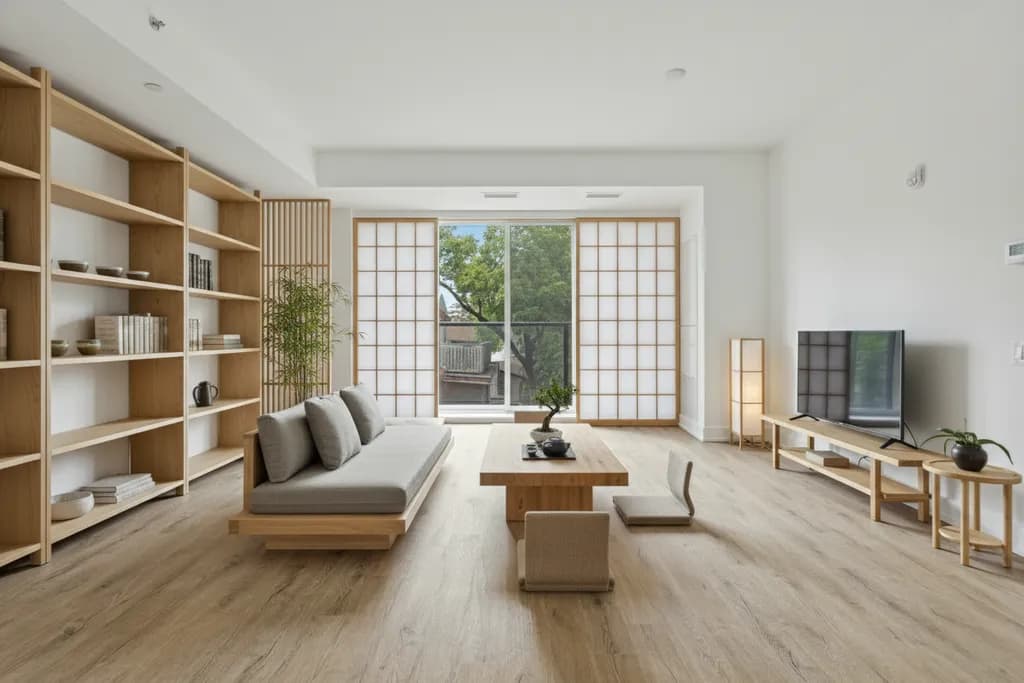
Start with the sofa, because it sets the height of everything else. A low, deep seat in oatmeal or clay linen, around 14 to 16 in (36 to 41 cm) off the floor, anchors the room. Pair it with a solid coffee table 12 to 14 in (30 to 36 cm) high, in walnut if your floor is pale.
Overhead, a paper lantern 18 to 24 in (45 to 60 cm) across gives soft light without glare. Choose a wool or jute rug big enough that the sofa's front legs sit on it. Then stop: one branch in a stoneware vase is the decor, and the media unit stays closed.
Japandi bedroom
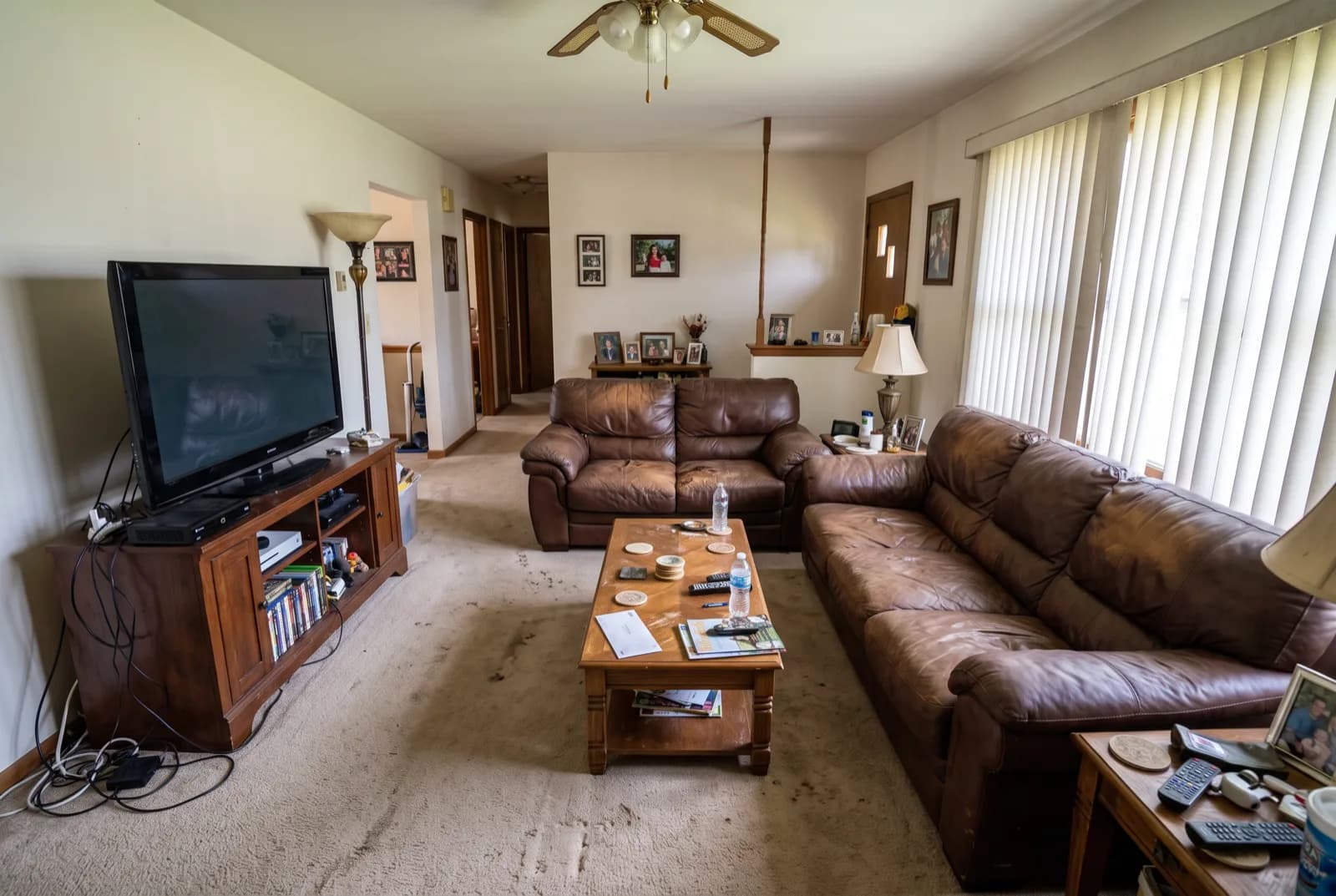
Bedrooms suit Japandi best, since a low, quiet room helps you wind down. Pick a platform bed with a solid base and a mattress top around 16 to 18 in (41 to 46 cm) from the floor. Dress it in linen in two close neutrals, and use a bench or low chest instead of a tall dresser where space allows. A paper or linen table lamp on a 2700K bulb is all the lighting you need. For the purer version, browse these Japanese bedroom ideas.
Japandi kitchen
Flat-panel cabinets in light oak or matte warm white set the base, and one darker element (walnut open shelves or a charcoal island) gives it weight. Handles disappear in favor of finger pulls or push latches. Countertops are honed stone, matte quartz or oiled wood, and small appliances live behind doors. Keep the counter down to a wooden board and a ceramic utensil pot.
Japandi bathroom
Keep it short and tactile: stone or stone-look tile, a wall-hung vanity in oak or walnut, matte black or brushed brass faucets, a teak stool, and one folded linen towel in sight. Warm gray grout looks softer than bright white.
How can you preview a Japandi look on your own room?
In RivAI, get a Japandi look with the Japanese, Zen or Scandinavian styles plus a short prompt. Japanese or Zen brings the warmth and the low lines; Scandinavian brings the lighter wood. Rendering one photo in two of them shows which half of Japandi your room leans toward.
- Take a daylight photo of the room from a corner, phone held horizontally.
- In the AI interior design tool, pick your room type, then choose Japanese or Zen for a warmer, lower look, or Scandinavian for paler wood.
- Add a short prompt such as "Japandi: light oak, linen, paper lantern, low platform bed, no clutter".
- Choose Keep Structure so your walls, windows and layout stay put. A Standard result takes about 30 seconds.
- Compare it with your original on the before/after slider, then try a wall color with the Paint tool by typing a hex code like #F2EDE4 into the color picker.
Free use covers 2 designs per install, and free results carry a watermark. The app runs on iPhone and iPad only. Treat the render as a preview of the mood, and check real paint samples on your wall before you buy gallons.
FAQ
What is Japanese style decor called?
Mostly it's just called Japanese style or Japanese minimalism. A traditional Japanese room with tatami mats and sliding paper screens is a washitsu. Wabi-sabi often gets used as a style name too, though it's really a philosophy about finding beauty in imperfect, aged and handmade things, which Japandi borrows.
What is the 3-5-7 rule in decorating?
It's a styling guideline: group decorative objects in odd numbers, such as three, five or seven, because odd groupings look more relaxed than pairs. In a Japandi room, stop at three. A vase, a bowl and a small stack of books on a long sideboard is about the limit before the surface starts to look busy.
What is a Japandi kitchen?
A Japandi kitchen uses flat, handleless cabinets in light oak or warm white, one darker wood or charcoal element, matte stone or wood countertops and nearly bare counters. Appliances and clutter stay behind doors, and open shelves hold only everyday stoneware. The goal is a kitchen that looks calm even when you're cooking in it.
Does Japandi work with kids and pets?
Yes, with two adjustments. Choose washable slipcovers in a mid-tone clay or greige instead of pale oat, which hides marks better, and plan more closed storage than you think you need, like low cabinets or lidded baskets for toys. Durable wool or flat-weave rugs handle traffic better than delicate jute.
Is Japandi going out of style?
The label may fade, but the ingredients won't. Warm neutrals, good wood, linen and fewer objects have been around for decades in both Japanese and Nordic homes. If you buy solid basics and skip trend pieces sold as Japandi decor, the room will age well whatever people call it in a few years.
RivAI Team
We build RivAI, the AI home design app for iPhone, at PixelPort LLC. RivAI is our product, so read our picks with that in mind: we take no payment for placements, and every product claim is checked against the app. About us · Editorial policy.
Published · Last updated
- #japandi
- #interior styles
- #minimalism
- #color palettes
Keep reading
 Inspiration
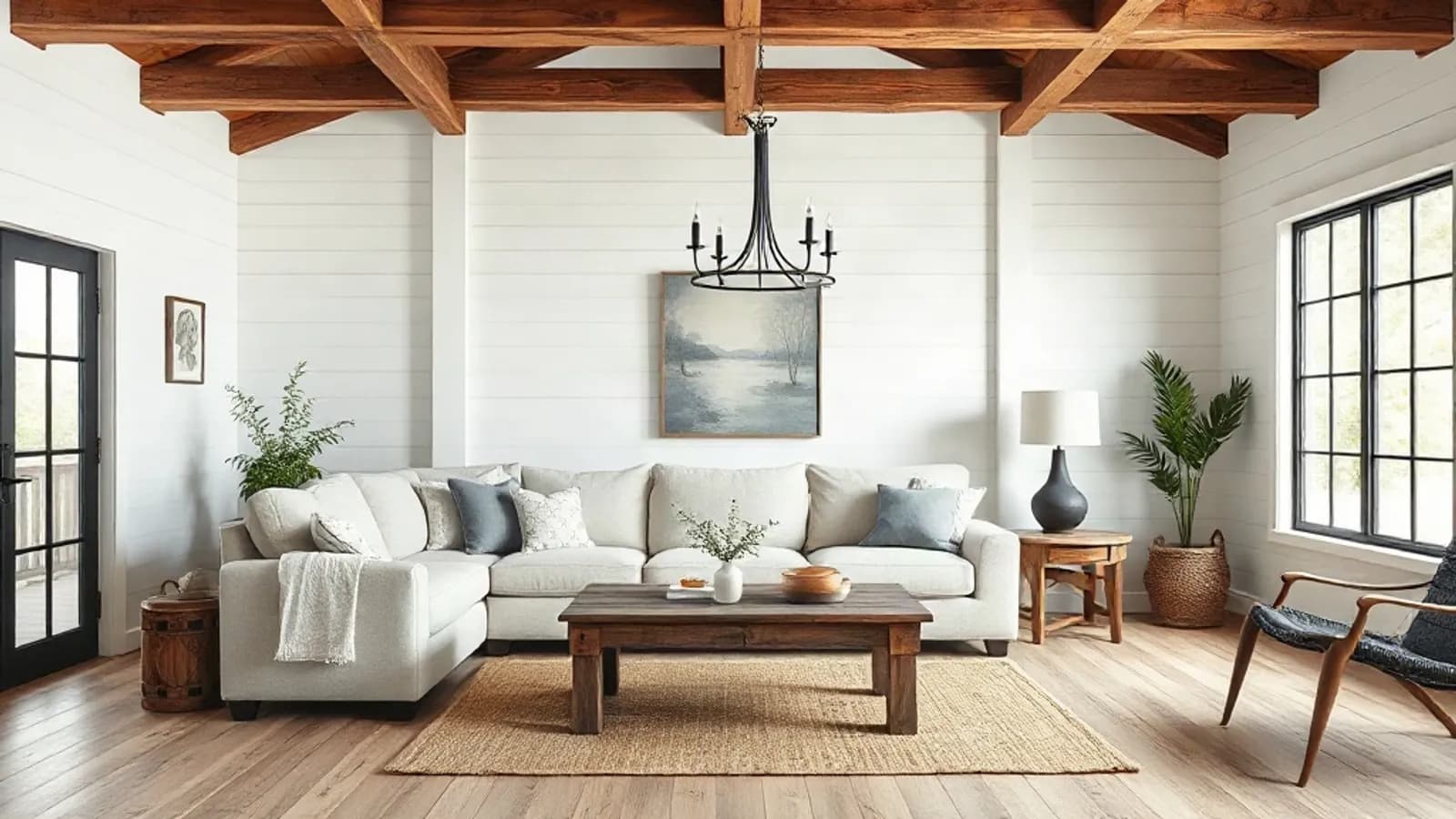
Modern farmhouse living room ideas: 15 warm, uncluttered looks
Fifteen modern farmhouse living room ideas grouped by walls, furniture, lighting, textiles and the warmer 2026 update. Each one comes with a size, bulb temperature or hex code, plus a short list of what to skip.
· 10 min read
InspirationJapandi vs Scandinavian: what's the difference?
Both styles love pale wood and calm rooms, but Scandinavian leans bright and cozy while Japandi goes lower, darker and quieter. Here is how to tell them apart and pick one.
· 6 min read
 Inspiration
Living room color ideas: 12 palettes with hex codes
Twelve living room color palettes with hex codes, grouped from warm neutrals to the earthy browns paint brands picked for 2026. Each one notes the light and room size it suits.
· 11 min read
Try this on your own room
Snap it, pick a style, see it redesigned in about 30 seconds.
Free to try · 3-day free trial on annual · Cancel anytime
