
Curtain ideas for a living room: 14 styles with sizes and colors
By RivAI Team · · 12 min read
The short answer
The best curtain ideas for a living room are floor-length panels hung 4 to 6 inches below the ceiling, rods extending 8 to 12 inches past each side, and fabric 2 to 2.5 times the rod length. Pick pinch pleat or ripplefold headings, linen or velvet, and a color that blends with the walls or adds one clear contrast.
What are the best curtain ideas for a living room?
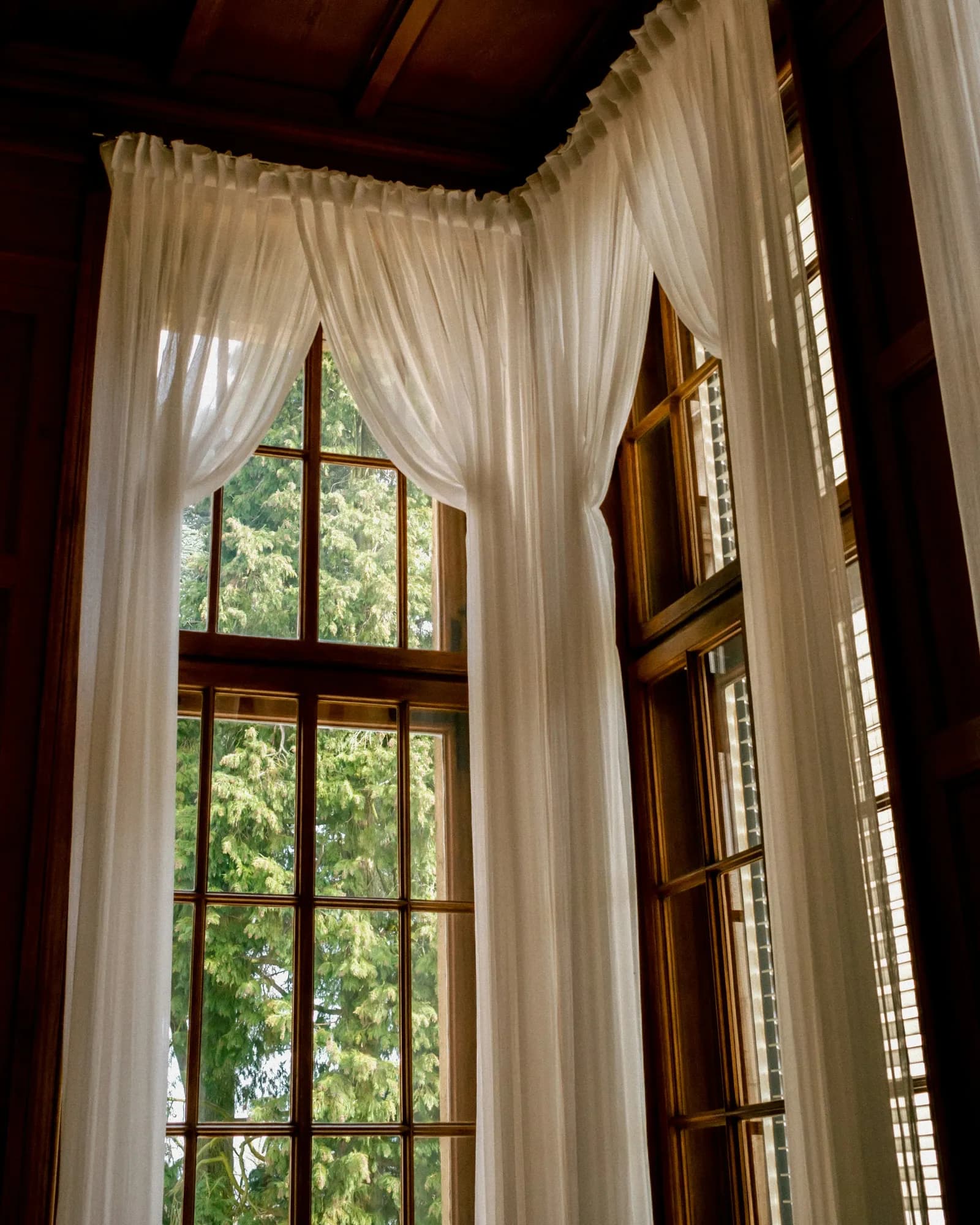
The best curtain ideas for a living room start with how you hang them, then the heading, fabric and color. Mount the rod 4 to 6 in (10 to 15 cm) below the ceiling, run it 8 to 12 in (20 to 30 cm) past each side of the window, and buy enough fabric to cover 2 to 2.5 times the rod length. Let the panels just kiss the floor.
For headings, pinch pleat looks tailored and ripplefold looks modern; grommet and rod pocket suit casual rooms on a budget. Linen is the easy default, velvet adds warmth and softens sound, sheers filter daylight, and lined blackout panels help a living room that doubles as a TV room. Color comes down to one choice: blend the curtains into the walls so the window reads bigger, or make them the one contrast in the room. The trade-off is cost, since custom pleated panels cost more than ready-made grommets.
Which curtain heading styles work best in a living room?
The heading is the top of the panel, where it meets the rod or track. It decides how the folds fall, how far the curtains stack back when open, and how formal the window looks. Here are five worth knowing.
1. Pinch pleat
Pinch pleats gather the fabric into stitched groups of two or three folds every 4 to 6 in (10 to 15 cm), so the panel falls in even, deep columns. They hang from rings or hooks, look tailored without being stiff, and stack back neatly. Pick pinch pleat for traditional and French country living rooms, or any room where the curtains are the main softness. Expect to pay more, since most good versions are custom or semi-custom.
2. Ripplefold
Ripplefold panels snap onto carriers in a ceiling or wall track and fall in a soft, continuous S-curve. Nothing bunches at the top, so the look stays clean across the whole rod. This heading suits modern living rooms with big windows or sliding doors, where you want the curtain to read as a wall of fabric. Ceiling-mounted tracks also let you hang panels right at the ceiling line, which makes a low room feel taller.
3. Grommet
Grommet (eyelet) panels have metal rings punched through the top and slide straight onto a rod. They open and close easily, so they're good for a window you use every day, and they're the cheapest ready-made option. The downside: the folds are wide and the stack is bulky. Keep grommets for casual rooms, and pick a rod that leaves about 1/2 in (1 cm) of play inside each ring.
4. Rod pocket
A rod pocket is a sewn channel at the top of the panel that slides over the rod and gathers the fabric into soft ruffles. It's a relaxed, cottage-style look that works well for sheers that stay closed. Sliding it open is a chore, though, so treat rod pocket curtains as fixed side panels. A ruffled header above the pocket adds a little height when the rod sits close to the frame.
5. Tab top
Tab tops hang from fabric loops sewn along the top edge, with the rod showing between each tab. They look casual and a little rustic, suit linen and cotton, and cost little. Tabs grip the rod, so they drag when you open them; use them on windows you rarely uncover, or pair them with a sheer that does the daily work.
| Heading | Look | Stacking width | Best for |
|---|---|---|---|
| Pinch pleat | Tailored, deep even folds | Compact | Traditional, French country and formal rooms |
| Ripplefold | Soft continuous waves | Very compact | Modern rooms, wide windows, sliding doors |
| Grommet | Casual, wide folds | Wide and bulky | Everyday windows and budget makeovers |
| Rod pocket | Gathered, cottage | Wide, bunches on the rod | Fixed side panels and sheers |
| Tab top | Relaxed, rustic | Medium | Rarely opened windows, linen panels |
Which curtain fabrics suit a living room?
Fabric changes how much light gets through, how the panel drapes and how it holds up to sun. In a living room, choose for daylight first and texture second.
6. Linen or linen blend
Linen is the safe default for a reason. It filters light softly, has a natural slub that keeps a plain color from looking flat, and goes with almost any style. Pure linen wrinkles and can shrink, so a linen-cotton or linen-poly blend is easier to live with. Oatmeal, flax and warm white linen suit coastal living rooms and most neutral schemes. Line it if the window gets strong afternoon sun, which fades unlined fabric.
7. Velvet
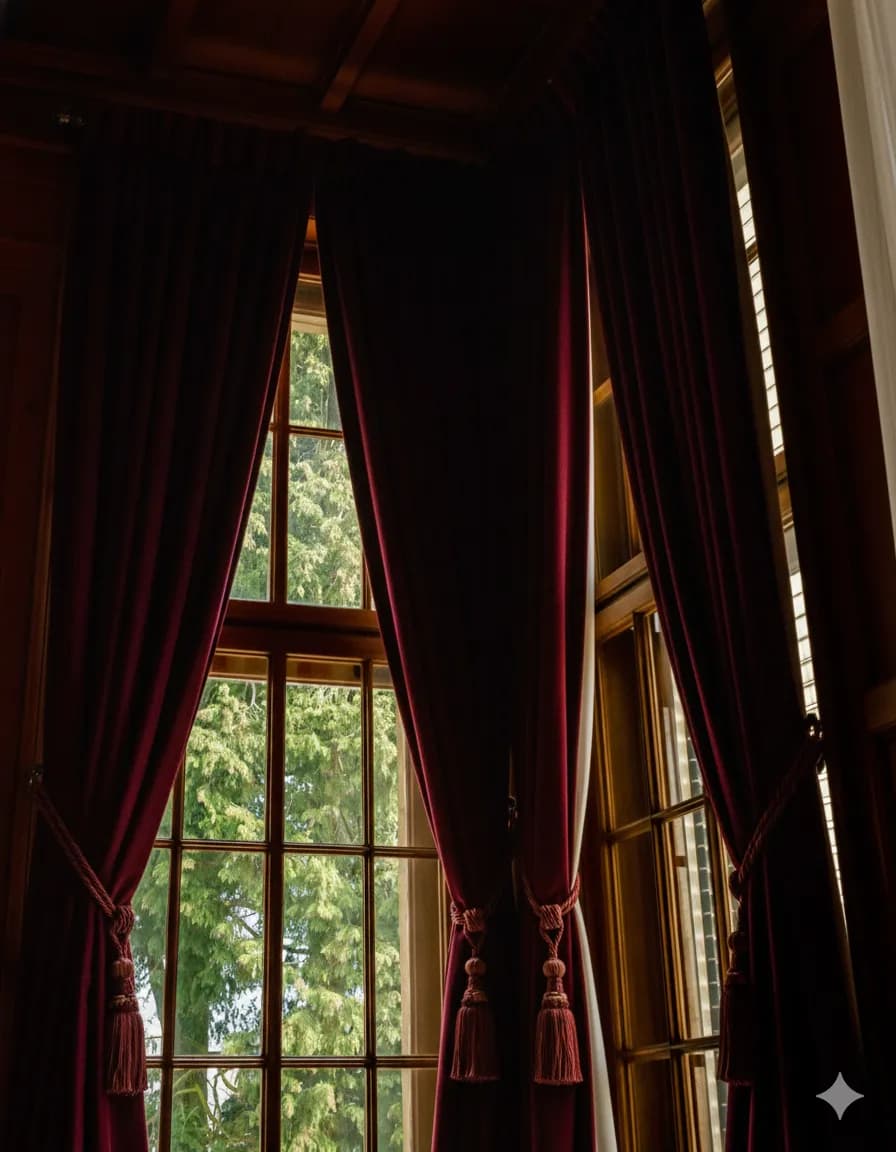
Velvet is heavy, so it hangs in straight, weighty columns and blocks drafts and some street noise. Deep colors like olive, navy, rust and plum look rich in velvet because the pile catches light at every fold. It suits rooms with high ceilings and mostly evening use. In a small or sunny room it can feel like too much, so try it on one wide window before dressing every opening.
8. Sheer
Sheers (voile, linen gauze, open-weave polyester) let daylight in while blurring the view from the street. On their own, they suit bright rooms that face a private garden or sit on a high floor. Buy them generously: sheers need the full 2.5 times the rod length to look soft instead of skimpy. Pure white can look cold in a north-facing room, so pick ivory or a warm off-white there.
9. Blackout or thermal lined
A lined panel gives you a face fabric you like plus a hidden blackout or thermal layer sewn behind it. It's the right call if you watch TV in daylight, the room faces a streetlight, or the window loses heat in winter. Look for white or ivory lining so the window looks tidy from outside. The same lining logic works in bedrooms, where it pairs well with colors chosen for sleep.
How do you choose curtain colors for a living room?
Start with the walls and the sofa, then decide what job the curtains have: disappear, frame the window, or carry color. Four strategies cover almost every room. If you're unsure where to begin, build a scheme in the palette generator first and pull the curtain color from it.
10. Match the wall color
Curtains in the wall color (or one shade deeper) make the window wall read as one surface, so the room feels calmer and the ceiling feels higher. This works best with light walls and full-height panels. Hold a fabric swatch against the wall in daylight and again at night, because a white that matches at noon can turn gray under warm 2700K bulbs.
11. Tone-on-tone
Go two or three steps lighter or darker than the wall in the same color family: oatmeal curtains on a warm white wall, mid-gray on pale gray, sage on a softer green. You get depth without a hard edge, and it's forgiving when your swatch match is slightly off. Texture does the heavy lifting here, so pair tone-on-tone with a visible linen slub or an open weave.
12. Contrast
Dark curtains against light walls (navy on white, charcoal on greige, rust on cream) frame the window like a picture and give the room an anchor. Repeat the curtain color at least twice elsewhere, in a cushion, a rug border or a lampshade, so it looks planned. Contrast panels show every inch of length and width, so get the hanging rules below right.
13. Pattern
Patterned curtains bring in pattern without committing a whole wall to wallpaper. Keep the print large on wide windows and smaller on narrow ones, and pull one color from it into the rest of the room. Vertical stripes add height. A bold botanical works best when the sofa and rug are plain.
See these colors on your own walls: Try this palette in RivAI
How high and wide should you hang living room curtains?
Hanging height and rod width matter more than fabric. A cheap panel hung high and wide looks better than an expensive one hung just above the frame. Use these rules of thumb before you drill. In a tight room this is the single biggest visual lift, alongside the other small living room ideas that open up the space.
- Set the rod height: 4 to 6 in (10 to 15 cm) below the ceiling, or at least halfway between the top of the window frame and the ceiling if there's crown molding in the way.
- Extend the rod 8 to 12 in (20 to 30 cm) past each side of the frame, so open curtains stack on the wall and leave the glass clear.
- Work out fullness: take the rod length, then multiply by 2 for a tailored look or 2.5 for a full, soft one. That's the total flat width of all panels together.
- Pick a length. A kiss floats about 1/4 to 1/2 in (0.5 to 1 cm) above the floor, a break runs 1 in (2.5 cm) longer so the hem bends slightly, and a puddle adds 2 to 3 in (5 to 8 cm) that pools on the floor.
- Measure the drop from where the fabric actually hangs: the bottom of the ring's eyelet, the top of a grommet or the track carrier. Rings add 1 to 2 in (2.5 to 5 cm) of height, which is exactly where kissing hems go wrong.
- Check clearance. Brackets should hold the rod far enough from the wall to clear the window trim and handles, usually 3 to 4 in (8 to 10 cm), with room for a second rod if you're layering.
14. Layer sheers behind drapes
A double rod or double track lets you run sheers on the inner rail and heavier drapes on the outer one. The sheers stay closed most of the day for privacy and soft light, and the drapes close at night for warmth and darkness. Keep the sheer a shade lighter than the drapes and the same length, so both hems line up. On a shallow window wall, a two-channel ceiling track takes less depth than two rods.
Most of these ideas can be tested for little money before you commit to custom panels.
| Idea | Try it if | Cheapest way to test |
|---|---|---|
| Rod near the ceiling | Your windows look short or the ceiling feels low | Tape a strip of paper at the new height and stand back |
| Wider rod | Open curtains cover part of the glass | Pin a bedsheet to the wall past the frame to see the stack |
| Pinch pleat look | You want a tailored, finished window | Use pin-on pleater hooks on panels you already own |
| Velvet | The room is drafty or used mostly at night | Order fabric swatches and pin them up for a week |
| Layered sheers | You need privacy by day and darkness at night | Add a second bracket arm before buying a double rod |
| Contrast color | The room feels flat or lacks an anchor | Preview it on a photo of your own window |
What's the modern alternative to curtains?
Not every window needs fabric panels. These options look cleaner on small windows, behind a sofa or in rooms that lean minimal:
- Roman shades fold up into neat horizontal pleats. Inside-mount versions need a recess deep enough for the headrail, so measure it first; about 2 in (5 cm) is a common minimum.
- Woven wood shades in bamboo, jute or reed add texture and filter light. Add a privacy liner if the room faces the street.
- Sheer panels on a ceiling track: the curtain idea stripped down. They read like a soft wall and slide fully out of the way.
- Plantation shutters with wide louvers, 3.5 in (9 cm) or more, look built-in and give precise light control, though they cost more than most curtains.
- Motorized shades suit tall or hard-to-reach windows. Plan the power (hardwired or battery) before you paint.
Shades and curtains also work together: a roman shade for privacy plus fixed side panels for softness is a common living room pairing.
How can you preview new curtains on your own living room?
Fabric and hardware are a pain to return, so it helps to see a color and length on your actual window first. In the RivAI AI interior design app, open the Curtains tool, add a photo of your window wall, and describe what you want, for example "floor-length oatmeal linen pinch-pleat curtains hung near the ceiling". The result comes back in about 30 seconds on Standard, and the before/after slider lets you compare it with your current window.
Keep the limits in mind. The result is a visual preview: it won't give you measurements, panel widths or a fabric order, so you still need the hanging rules above. Free use covers 2 designs per install, free results carry a watermark, and the app runs on iPhone and iPad only.
What curtain mistakes should you skip in a living room?
A few common choices make even good fabric look cheap. Skip these:
- Curtains that stop above the floor. Anything shorter than a kiss looks like it shrank in the wash, unless it's a deliberate sill-length panel over a radiator.
- Skinny panels. A single 50 in (127 cm) ready-made panel per side on a wide window looks flat and won't close properly.
- Rods hung just above the frame, which chop the wall, hide daylight and make the ceiling feel lower.
- Shiny polyester in a warm, wood-heavy room. The sheen reads plasticky next to oak, linen and wool; a matte weave fits better.
- Puddled hems where there are pets, kids or a robot vacuum. Go with a kiss or a slight break.
FAQ
What's in style for living room curtains in 2026?
In our view, what you see most right now is floor-length linen in warm neutrals, ceiling-mounted ripplefold tracks, and sheers layered behind heavier drapes. Deeper velvet colors like olive, rust and navy are showing up too. Treat these as taste, not rules: well-hung neutral panels date far more slowly than any trend color.
Should curtains be lighter or darker than your sofa?
A useful guideline: go lighter than the sofa if the room is small or dim, so the window stays the brightest part of the room. Go darker if the sofa is pale and the room needs an anchor. An exact match tends to look flat, so aim for a few shades of difference or a clearly different texture.
Do living room curtains have to touch the floor?
Floor-length panels look best in most living rooms because they make windows and ceilings look taller. The exceptions are windows over a radiator, a built-in seat or a deep sill, where sill-length panels, apron-length panels about 4 in (10 cm) below the sill, or a roman shade make more sense.
Should all the curtains in an open-plan living room match?
Windows you can see together should share the same rod height, length and heading, even when the windows differ in size. Color can shift between separate zones, as long as the fabric weight and hardware finish stay consistent so the space reads as one room. Mixed rod heights on one wall look like a mistake.

RivAI Team
We build RivAI, the AI home design app for iPhone, at PixelPort LLC. RivAI is our product, so read our picks with that in mind: we take no payment for placements, and every product claim is checked against the app. About us · Editorial policy.
Published · Last updated
- #curtains
- #living room
- #window treatments
- #decorating
Keep reading
 Inspiration
Modern farmhouse living room ideas: 15 warm, uncluttered looks
Fifteen modern farmhouse living room ideas grouped by walls, furniture, lighting, textiles and the warmer 2026 update. Each one comes with a size, bulb temperature or hex code, plus a short list of what to skip.
· 10 min read
 Inspiration
Accent wall ideas: 16 paint, wallpaper and panel looks that work
Sixteen accent wall ideas in paint, texture, wood and wallpaper, each with one number you can use. Plus the rule for picking the right wall, and what to skip.
· 12 min read
 Inspiration
Living room color ideas: 12 palettes with hex codes
Twelve living room color palettes with hex codes, grouped from warm neutrals to the earthy browns paint brands picked for 2026. Each one notes the light and room size it suits.
· 11 min read
Try this on your own room
Snap it, pick a style, see it redesigned in about 30 seconds.
Free to try · 3-day free trial on annual · Cancel anytime
